Posture guide
Pelvic tilt
The pelvis can tip forward or back, or sit higher on one side. Long sitting, weak glutes and habits like standing on one leg all play a part.
Two directions
- Front to back: an anterior tilt shows as a deeper curve in the lower back; a posterior tilt flattens it
- Side to side: one hip sits higher than the other in a front photo
- Swayback, often mixed up with anterior tilt: the hips slide ahead of the ankles and the chest leans back. See swayback vs anterior pelvic tilt
How the scan reads it
From the front, hip balance is the angle of the line between your hips against horizontal (score 0 at 10°). From the side, pelvis front-to-back tilt is the angle of the ankle-to-hip line against vertical (score 0 at 10°).
Where to start
See a healthcare professional for back pain that spreads down the leg, numbness or pain that does not settle.
- Stand up and move every 30–50 minutes
- Glute activation and gentle core work before heavier training
- Hip flexor and lower-back stretches after sitting
- Re-scan after four weeks
Keep reading
Related guides

Lower Back Pain When You Twist? Why Your Hips and Upper Back Matter More Than Your Lower Back
Swayback Posture vs Anterior Pelvic Tilt: How to Tell Them Apart From One Side Photo, Plus a 10-Minute Routine

Anterior Pelvic Tilt and Uneven Hips: 5 Ways to Check at Home, Plus a 12-Minute Routine
A 4-Week Home Program for Hip and Pelvis Balance: Six Moves, Added Week by Week
Wake Up Your Glutes After Sitting All Day: A 13-Minute Hip Routine
Lower Back Stiff After Sitting? A 13-Minute Core Routine on One Mat

Lower Back Stiff From Sitting All Day? Desk Breaks and a 10-Minute Routine
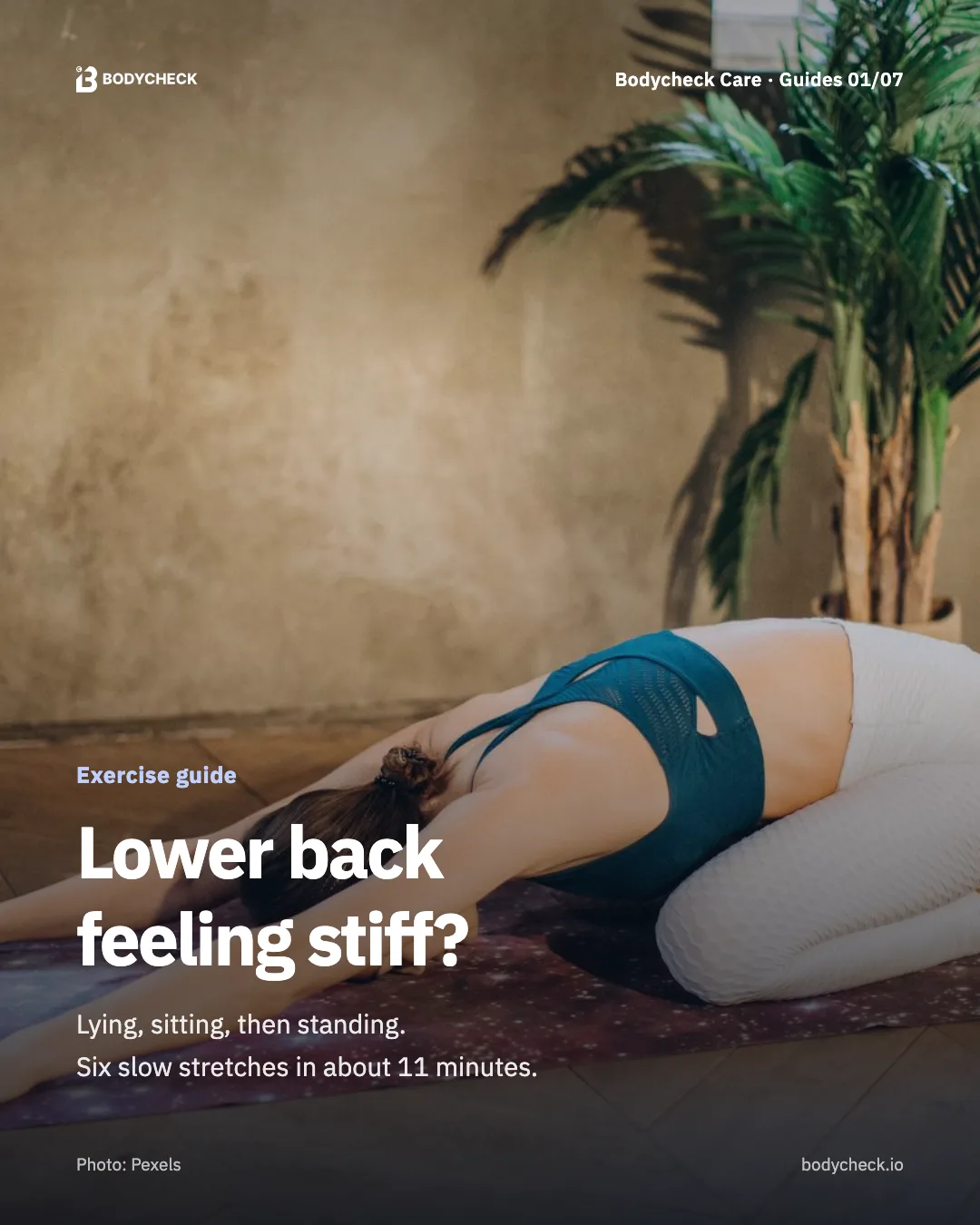
Lower Back Stretches for a Stiff Back: 6 Gentle Moves in 11 Minutes
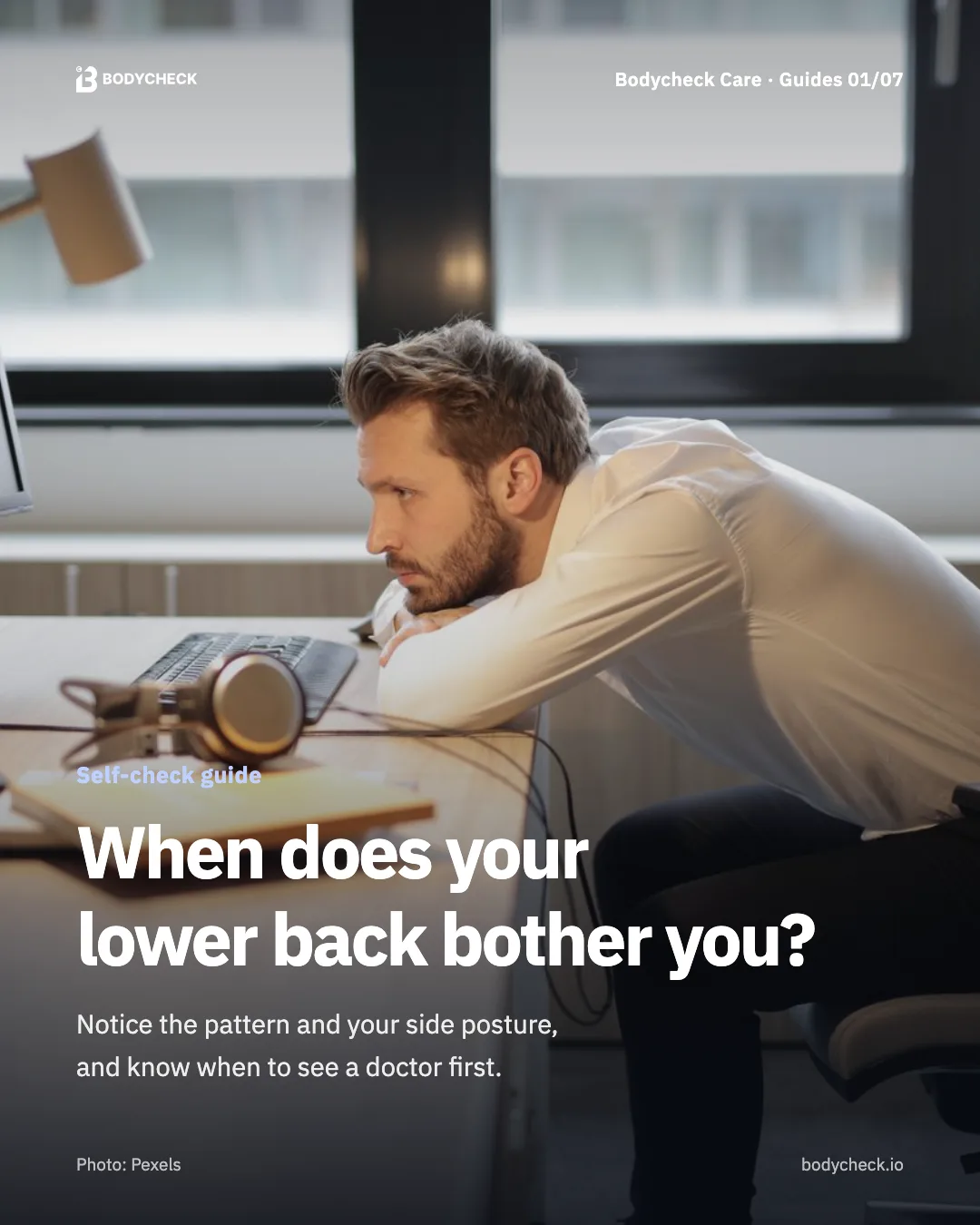
Lower Back Discomfort Self-Check: Notice Your Pattern and Know When to See a Doctor
Measure. Train. Measure again.
Free to download, with unlimited posture scans. Premium starts with a 7-day free trial.
Bodycheck Care is a general wellness app, not a medical device. It does not diagnose, treat or prevent any disease. Talk to a healthcare professional about pain or any health concern.