Anterior Pelvic Tilt and Uneven Hips: 5 Ways to Check at Home, Plus a 12-Minute Routine
Check your hips in the mirror, against a wall, on one leg, on your shoe soles and in how your jeans twist. Then try a 12-minute routine that works both sides evenly.
Short answer: At home you can get a rough read on your hips from five things: your hands on your hip bones in the mirror, your side view against a wall, standing on each leg, your shoe soles, and which way your waistband twists. Don't decide from one clue. Look for several that point the same way. Then do the six moves below with equal reps on each side, about 12 minutes, three times a week for four weeks.
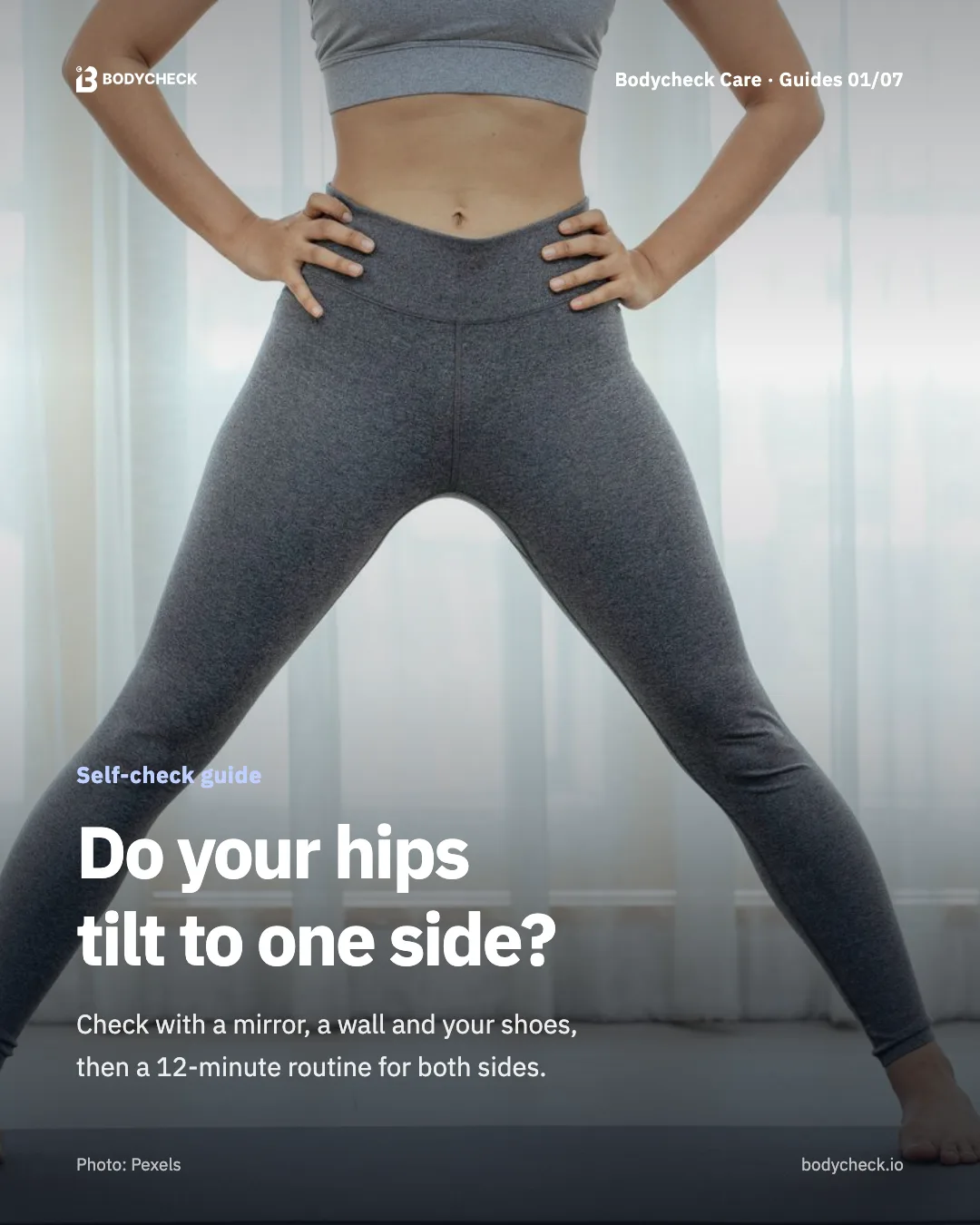
Hi, I'm an editor on the Bodycheck Care team. By evening, the button on my jeans has usually drifted a little to the left. And when I cross my legs on the train, it's always the right leg on top. I never thought much about either, until one day I put my hands on my hips in the mirror and wondered if they were level.
That alone doesn't mean anything is "off." So today I'll walk through simple ways to check your own hips from the front, the side and everyday clues, then share a 12-minute routine that works both sides evenly.
What should you look for in the mirror?
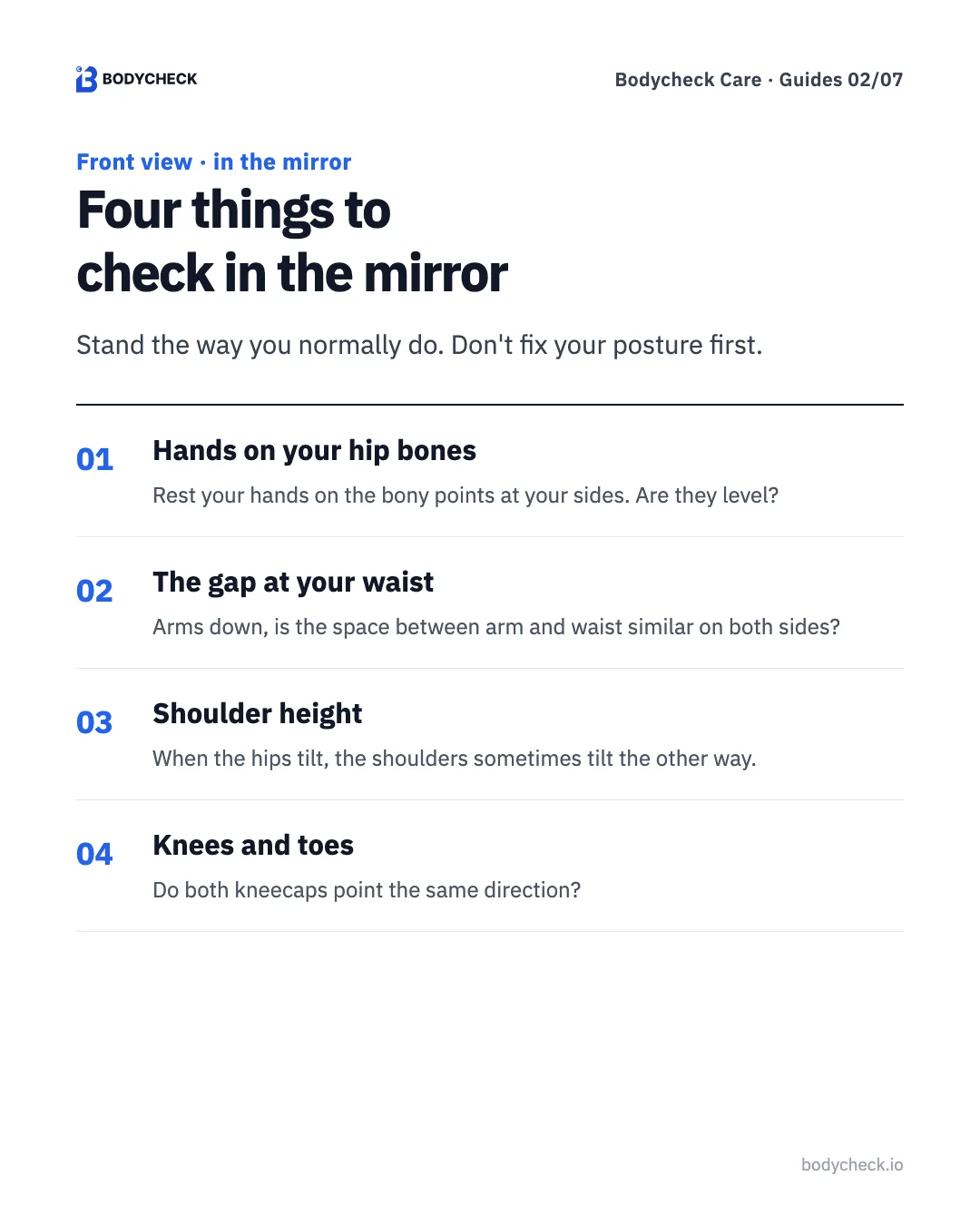
Stand barefoot in front of a full-length mirror, the way you normally stand. If you try to stand up straight, you won't see your usual posture. Fitted clothes make this easier.
- Hands on your hip bones. Rest your hands on the bony points at the sides of your waist. Are they level?
- The gap at your waist. With your arms down, is the space between your arm and waist a similar shape on both sides?
- Shoulder height. When the hips tilt, the shoulders sometimes tilt the other way.
- Knees and toes. Do both kneecaps point in the same direction?
A mirror flips left and right, so snap a front photo on your phone too. It makes comparing later much easier.
How do you check from the side?
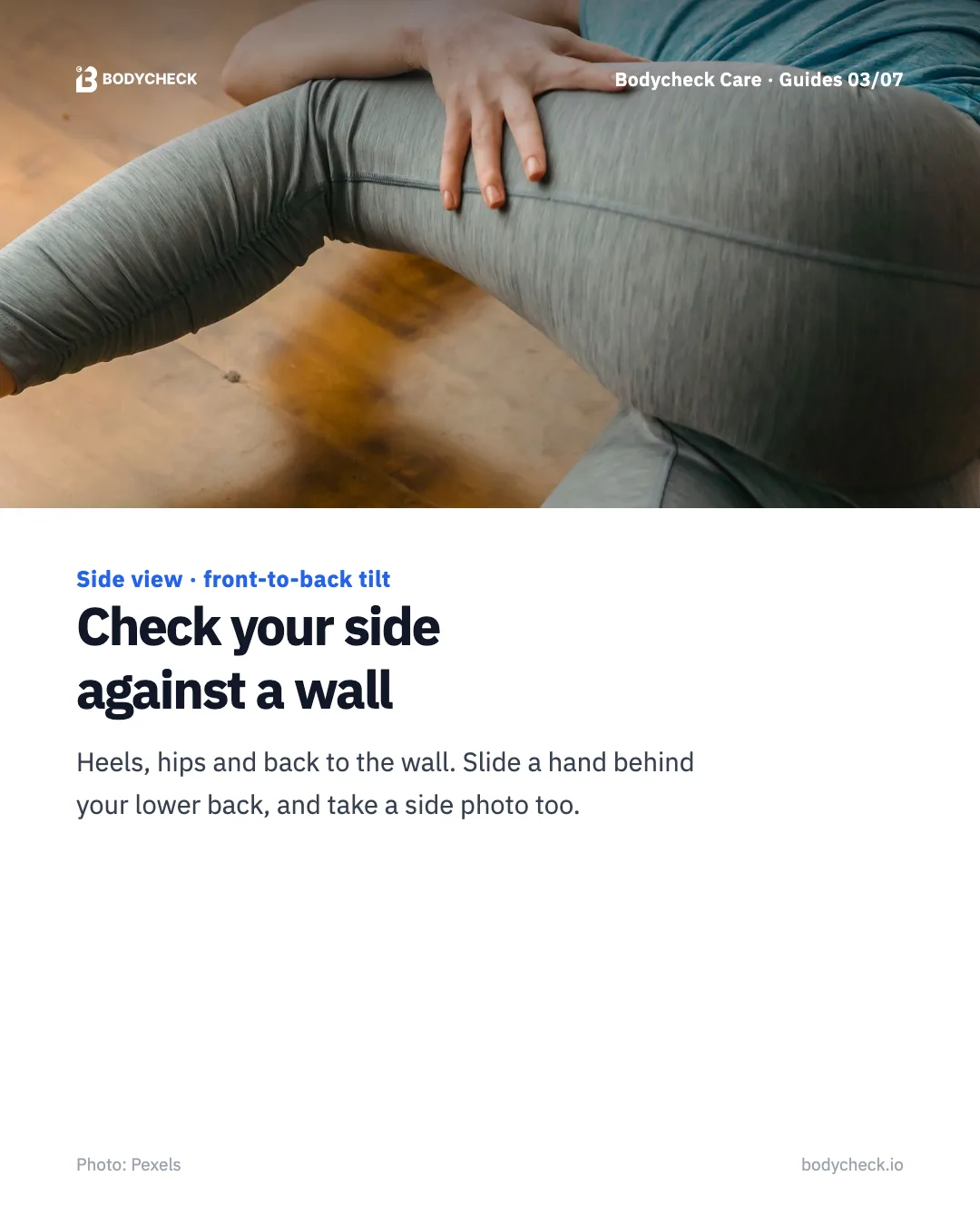
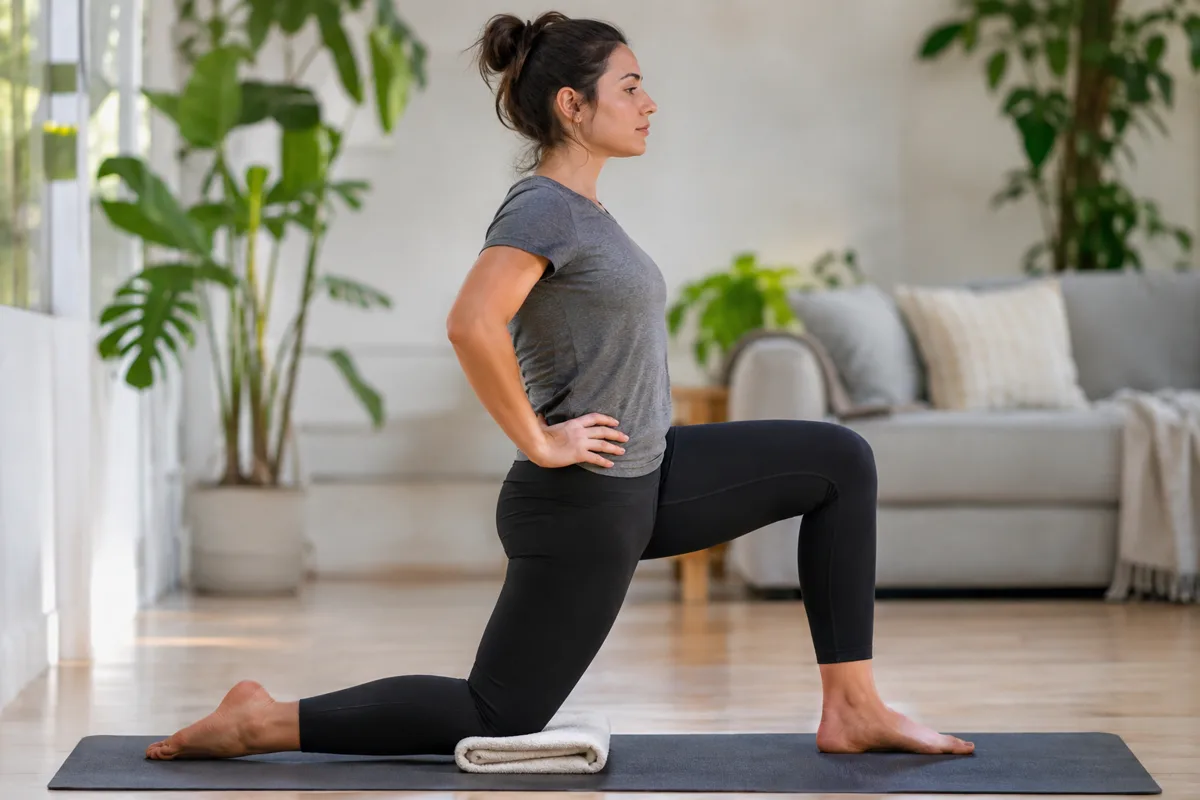
Your pelvis can tilt front to back as well as side to side. That's what the side view shows. When the top of the pelvis tips forward and the lower back arches more, people call it anterior pelvic tilt; tipped back with a flatter lower back is posterior pelvic tilt. A wall check can't tell you which you have for sure, but it's a simple place to start.
Stand with your heels, hips and back against a wall, then slide a hand into the gap behind your lower back. Does your hand barely fit, is there room for a fist, or is there almost no gap? Just note what you feel. Everyone's lower back curves a little differently, so there's no single right number. I take a side photo at the same time, then repeat it in the same spot a few weeks later.
Can shoes and habits give you clues?
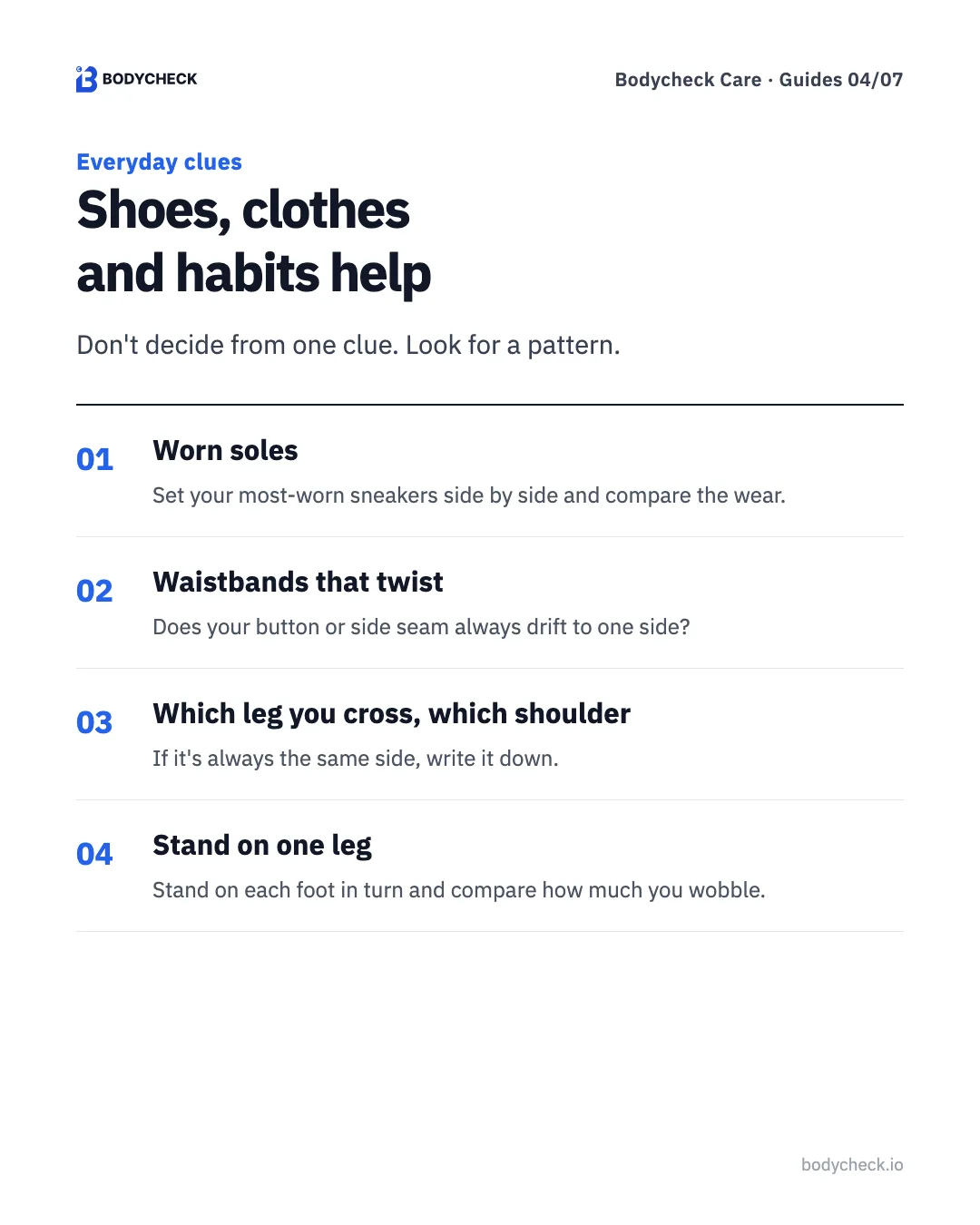
You can find hints away from the mirror too. They're clues, not answers, so don't decide from any one of them.
- Worn soles: Put your most-worn sneakers side by side and compare the wear on the outer and inner heel. Your feet, how you walk and the shoe itself all play a part.
- Waistbands that twist: Does your button or side seam always drift to the same side? Like my jeans.
- Which leg you cross, which shoulder carries your bag: If it's always the same side, write it down. Knowing your habits lean one way is useful in itself.
- Stand on one leg: Stand on each foot in turn and compare how much you wobble, and whether the hip on the lifted side drops. I wrote more about the one-leg check in the glute activation routine.
Which muscles keep your pelvis steady?
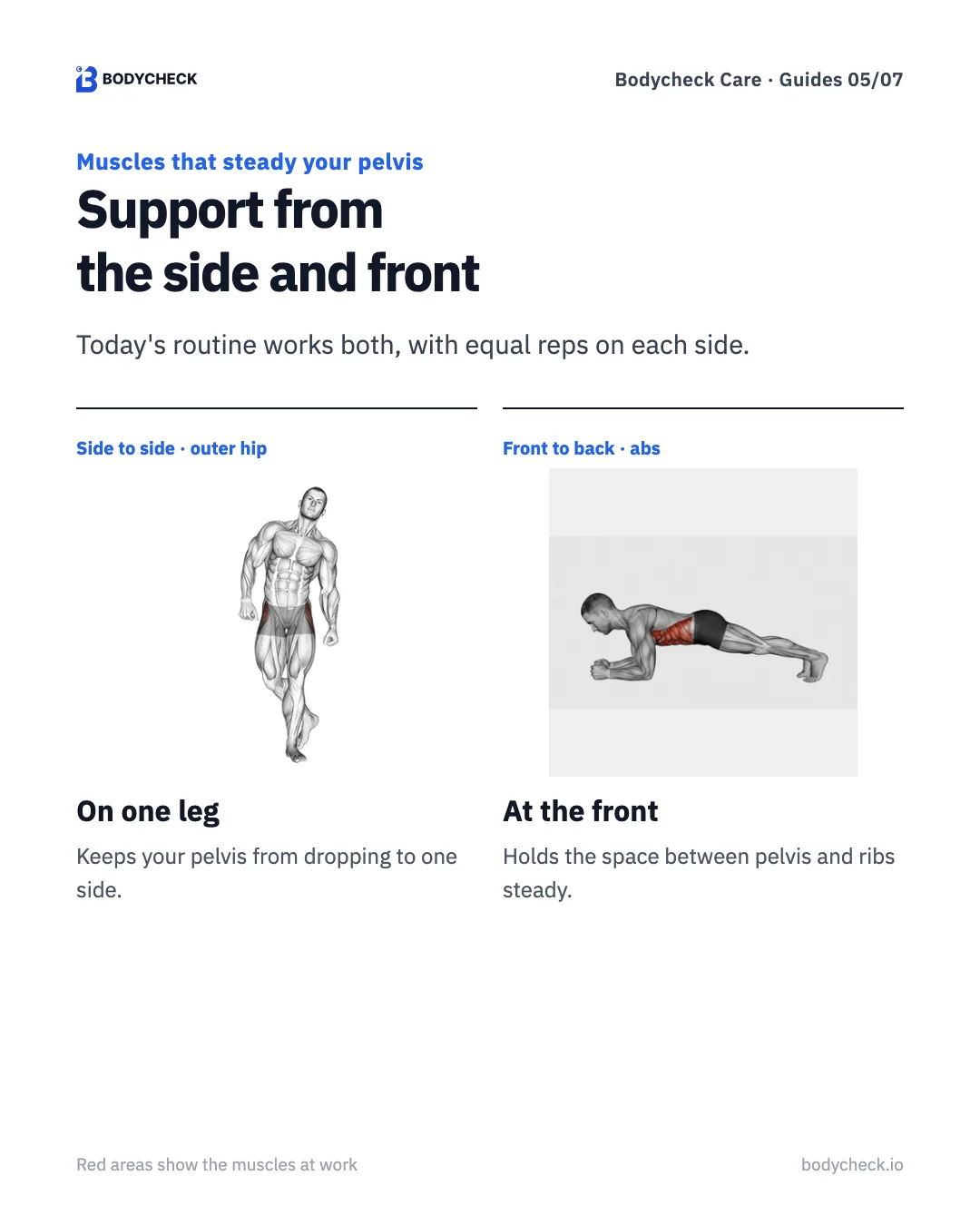
Your pelvis doesn't hold itself in place. The muscles around it do. Two areas are worth remembering.
- Outer hip (gluteus medius): Keeps your pelvis from dropping to one side when you stand on one leg. Every step you take is a brief one-leg stand, so it works all day.
- Front and sides of your stomach: Hold the space between your pelvis and ribs steady from the front.
That's why this routine focuses on moves that work these areas with equal reps on each side. Doing one side at a time, you'll quickly notice which side feels harder. Writing that down is a good self-check too.
How can you see your hip tilt as a number?
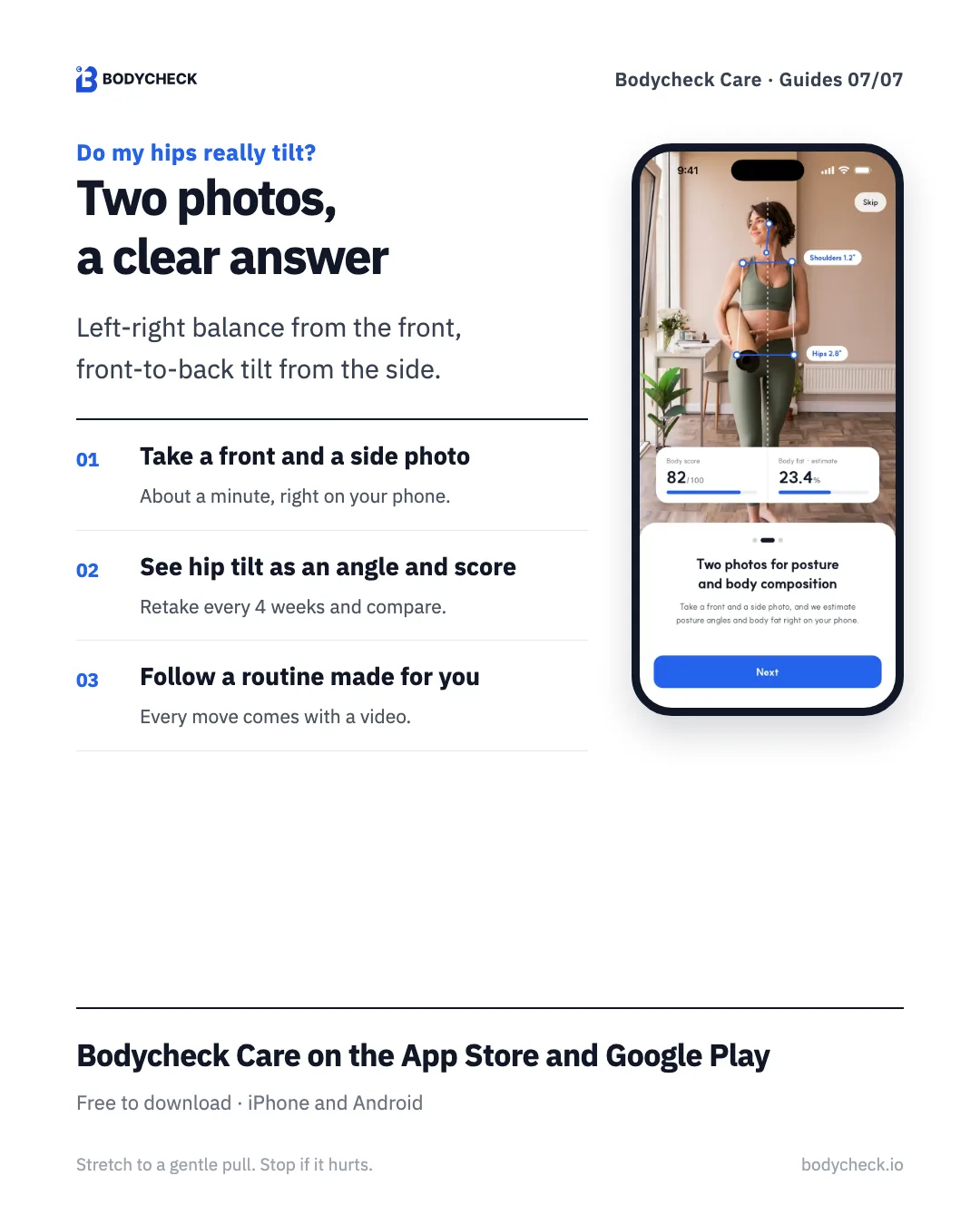
Mirror and hand checks shift a little each time with how you stand, the light and where your hands land. If you want the same yardstick every time, photos help. In Bodycheck Care you take a front and a side full-body photo, and the app shows your left-right hip balance from the front and your front-to-back pelvic tilt from the side as angles and a score. You also see head, shoulder and knee balance.
- Get the app and take a front and a side full-body photo.
- See your hip tilt as an angle and a score.
- Follow the moves picked for your result, each with a video.
- Retake the photos in the same spot after four weeks and compare.
The app is not a medical device. It's a way to record your posture with the same yardstick each time.
Bodycheck Care · Free
See your hip tilt from two photos
Take a front and a side photo to see how far your head and shoulders sit forward as a score, then follow moves picked for your result, each with a video.
The 12-minute routine to work both hips evenly
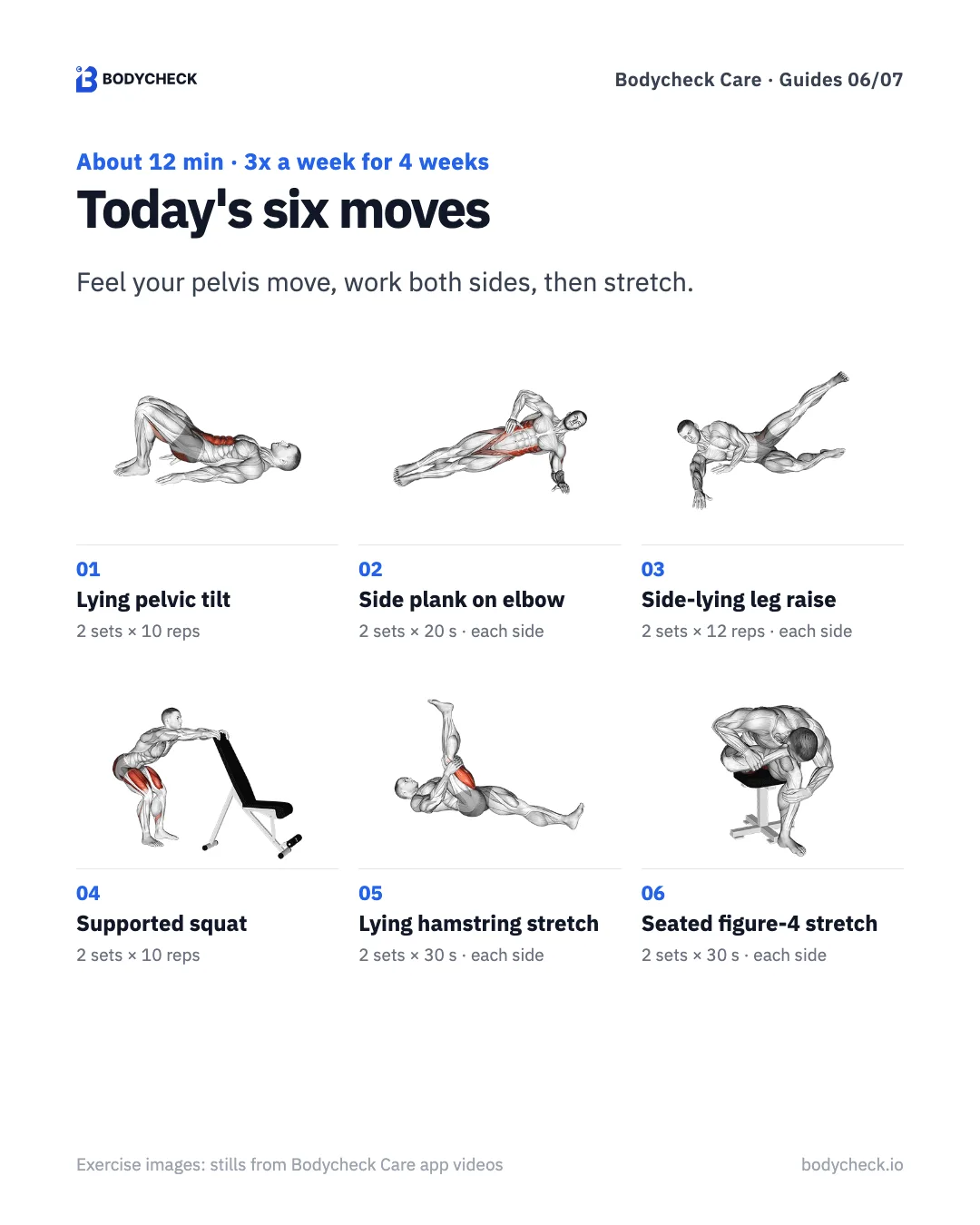
First feel your pelvis tilt while lying down, then work one side at a time lying on your side, squat in front of the mirror, and finish with stretches. A mat and a chair are all you need. Do it three times a week on alternate days, for four weeks. For one-sided moves, always keep reps equal on both sides.
1. Lying pelvic tilt · 2 sets × 10 reps
- Lie on your back with knees bent and feet flat.
- Breathe out, brace your stomach and press your lower back toward the floor.
- Hold for two seconds as your pelvis tucks slightly.
- Breathe in, release, and repeat 10 times.
2. Side plank on elbow · 2 sets × 20 s · each side
- Lie on your side with your elbow right under your shoulder.
- Stack your legs straight.
- Lift your hips so your body forms a straight line from head to feet.
- Hold 20 seconds, then switch sides. If it's too hard, bend your bottom knee and rest it on the floor.
3. Side-lying leg raise · 2 sets × 12 reps · each side
- Lie on your side, propped up on your elbow.
- Keep the bottom leg on the floor and the top leg straight.
- With toes pointing forward, slowly lift the top leg.
- Lower it slowly. After 12 reps, switch sides.
4. Supported squat · 2 sets × 10 reps
- Face a mirror, hold a chair back or a wall, and set your feet shoulder-width apart.
- Push your hips back as if sitting into a chair.
- Keep your knees in line with your toes and your chest up. Check in the mirror that you don't shift to one side.
- Push through your heels to stand. 10 reps.
5. Lying hamstring stretch · 2 sets × 30 s · each side
- Lie on your back and lift one leg toward the ceiling.
- Hold the back of your thigh or calf with both hands.
- Straighten the knee only as far as it goes and gently draw the leg toward you.
- Hold 30 seconds, then switch sides.
6. Seated figure-4 stretch · 2 sets × 30 s · each side
- Sit on a chair and rest one ankle on the opposite knee.
- Keep your back straight and lean your chest forward.
- Turn your upper body slightly toward the raised leg to stretch deep in your hip.
- Hold 30 seconds, then switch sides.
At a glance
| # | Move | Sets |
|---|---|---|
| 1 | Lying pelvic tilt | 2 × 10 reps |
| 2 | Side plank on elbow | 2 × 20 s · each side |
| 3 | Side-lying leg raise | 2 × 12 reps · each side |
| 4 | Supported squat | 2 × 10 reps |
| 5 | Lying hamstring stretch | 2 × 30 s · each side |
| 6 | Seated figure-4 stretch | 2 × 30 s · each side |
When I feel the urge to cross my legs at my desk, I do one round of move 6 instead. In Bodycheck Care every move has a video, and the app counts the time and sets for you.
Frequently asked questions
My hands sit at different heights in the mirror. Does that mean my pelvis is tilted? Not necessarily. How you stand, which leg takes your weight and where you put your hands all change what you see. Repeat the check on a few days under the same conditions and see whether several clues point to the same side.
If my hips look uneven, can exercise fix it? The moves here are practice for using the muscles around your pelvis evenly on both sides. They can't promise to change your shape. If the difference looks large, or your back or legs bother you, get checked by a doctor first.
One of my shoe soles wears down faster. Wear patterns also depend on your feet, how you walk and the shoe itself. Treat it as one clue to read alongside the mirror, wall and one-leg checks.
Should I do more reps on my weaker side? In this routine, keep reps equal on both sides. Notice which side feels harder or wobblier, and write it down.
Can I see my hip tilt as a number? Bodycheck Care takes a front and a side full-body photo and shows your left-right hip balance and front-to-back pelvic tilt as angles and a score. You can retake the photos every four weeks to compare. It is free on iPhone and Android.
Before you start
- These self-checks give you a rough picture. Don't judge your body from any single result.
- Stretch to a gentle pull. Stop right away if anything hurts or tingles.
- Don't hold your breath. Breathe out as you push.
- This is exercise guidance. If you have pain or numbness in your back, hips or legs, or a clearly large difference between sides, see a doctor before you exercise.
How about one photo today, hands on your hip bones in front of the mirror? Take another in the same spot four weeks from now and you'll have something to compare.
Bodycheck Care · Free
Take two photos and get moves picked for you
Take a front and a side photo to see how far your head and shoulders sit forward as a score, then follow moves picked for your result, each with a video.
References
- Photos: Pexels (free license). Exercise images and app screens: Bodycheck Care app.