Uneven Shoulders: Is One Shoulder Higher? A Self-Check and 10-Minute Routine
Your bag, a phone pinned between ear and shoulder, your dominant hand and leaning on one elbow can all go with uneven shoulders. Check your shoulder line in the mirror and in a back photo, then try a 10-minute routine that works both sides evenly.
Short answer: If one shoulder seems higher, start by looking at which shoulder carries your bag, whether you pin your phone between ear and shoulder, your dominant hand, and whether you lean on one elbow when you sit. These habits can go with uneven shoulders, but you can't pin it on any one cause. Record how you look now in the mirror and in a photo from behind, then do the six moves below with equal reps on each side, about 10 minutes, three times a week for four weeks. If the difference is large, appeared suddenly, or hurts, see a doctor before you exercise.

Hi, I'm an editor on the Bodycheck Care team. A while ago I was getting my passport photo taken, and the photographer said, "Drop your right shoulder just a little." I thought I was sitting straight. On the way home I realized my tote bag always goes on my right shoulder, and when I'm on the phone, it's tucked between my right ear and shoulder too.
That doesn't prove anything. So today I'll walk through everyday habits that can go with uneven shoulders, simple ways to check your own shoulder line in the mirror and in a photo, and a 10-minute routine that works your shoulders and trunk evenly on both sides.
Which habits can go with uneven shoulders?
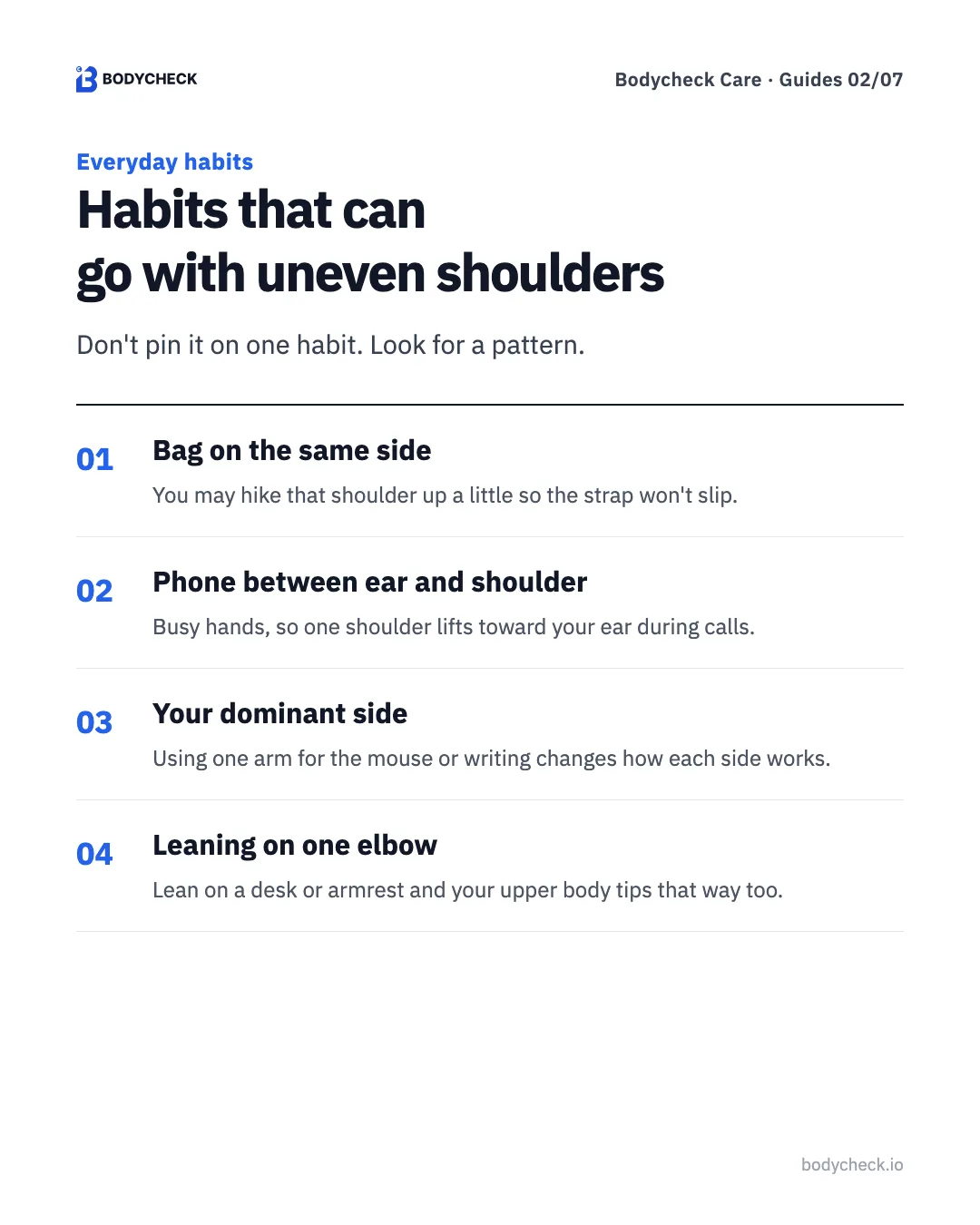
First, a useful reminder: no body is perfectly symmetrical. You have a dominant hand and a side you use more. Small differences are common.
When habits that favor one side stack up over the day, your shoulder may spend more time sitting higher or lower on that side.
- Bag on the same side: You may hike that shoulder up a little so the strap won't slip.
- Phone between ear and shoulder: When your hands are busy, one shoulder lifts toward your ear during calls.
- Your dominant side: Using one arm for the mouse or for writing changes how each side gets used.
- Leaning on one elbow: Lean on a desk or armrest and your upper body tips that way too.
Don't decide the cause from any one of these. Just note which ones show up in your day. For me, three out of four were on the right.
What should you look for in the mirror?
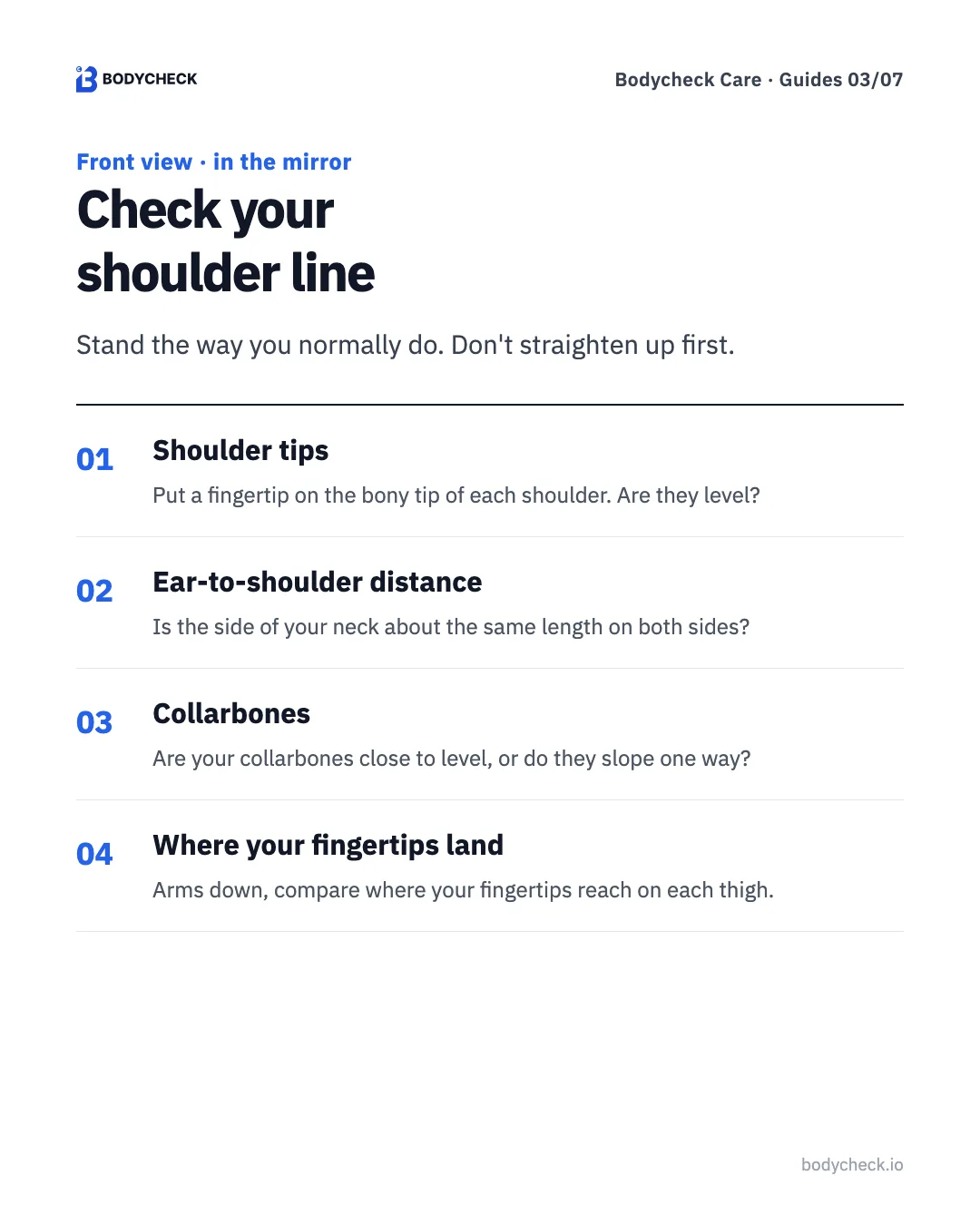
Stand in front of a full-length mirror the way you normally do. If you pull your shoulders back on purpose, you won't see your usual posture. Fitted clothes or a tank top make it easier.
- Shoulder tips. Put a fingertip on the bony tip of each shoulder. Are your hands level?
- Ear-to-shoulder distance. Is the side of your neck about the same length on both sides, or does one side look shorter?
- Collarbones. Are they close to level, or do they slope one way?
- Where your fingertips land. With your arms relaxed, compare where your fingertips reach on each thigh.
A mirror flips left and right, so take a front photo on your phone too. It makes comparing later much easier. If your shoulders look tilted, it's worth checking your hips as well. I covered that in 5 ways to check your pelvic tilt at home.
How do you check from behind?
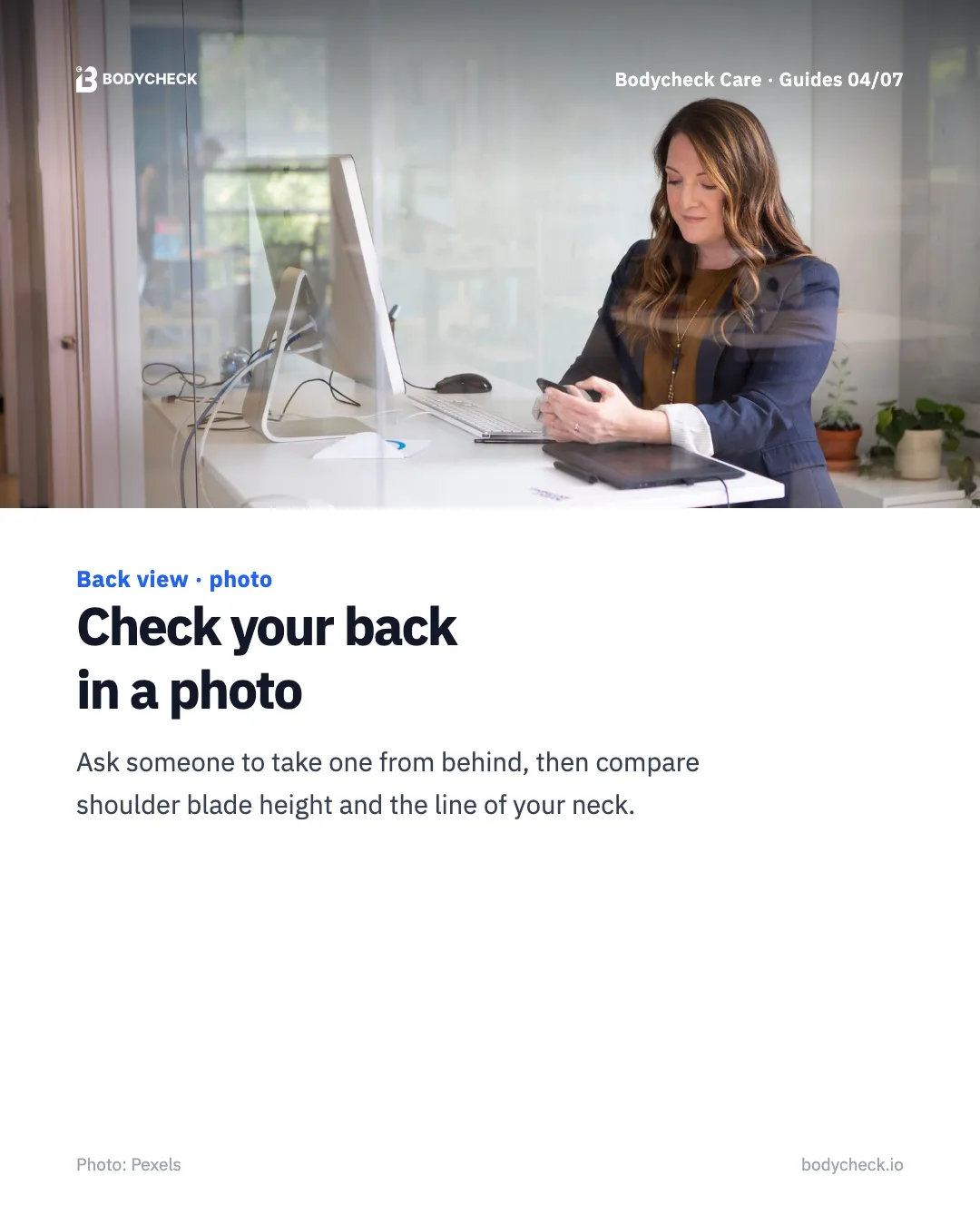
Shoulder height is often easier to see from behind. But you can't see your own back, so ask a family member or friend for one photo.
- Wear fitted clothes and stand the way you normally do. If your hair is long, tie it up or move it forward.
- The person taking the photo stands two or three steps behind you and holds the phone at chest height.
- In the photo, compare the height of your shoulder blades and the line from your neck down to each shoulder.
These are only ways to look at yourself. If the difference is clearly large, appeared recently, or comes with pain in your shoulder, back or neck, don't start with exercise. See a doctor first. A doctor can also check your spine.
Which muscles set your shoulder height?
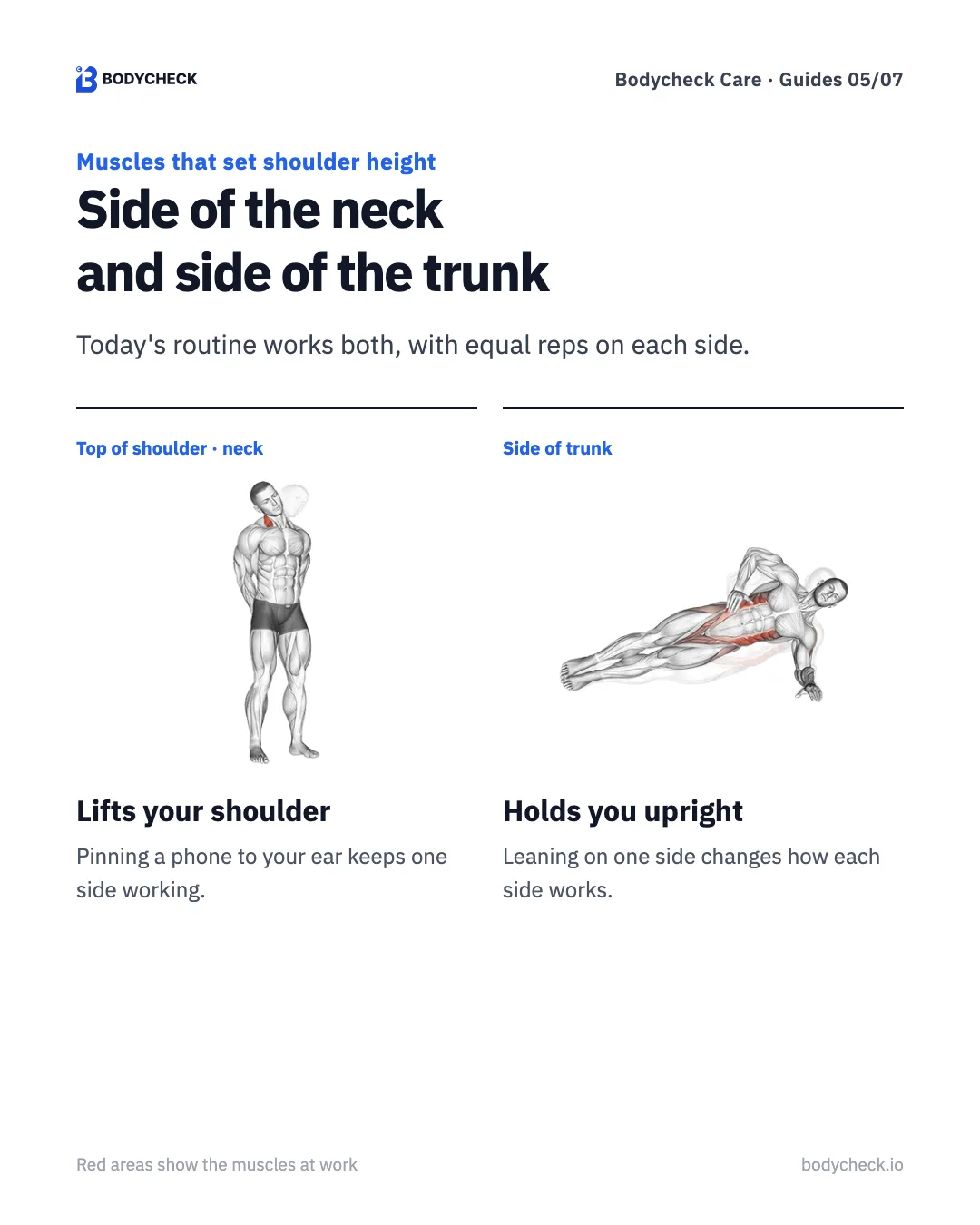
Your shoulders don't float on their own. Several muscles hold them from above, below and the sides. Two areas are worth remembering today.
- Top of the shoulder and side of the neck: Lifts your shoulder toward your ear. Pinning a phone there keeps one side working for a long time.
- Side of the trunk: Holds your upper body upright from the side. Leaning on one side changes how each side works.
So this routine stretches the side of the neck and back of the shoulder for the same time on each side, and works the shoulder blades and the side of the trunk with equal reps on each side. Doing one side at a time, you'll quickly notice which side feels stiffer. Writing that down is a good self-check too.
How can you see your shoulder height as a number?
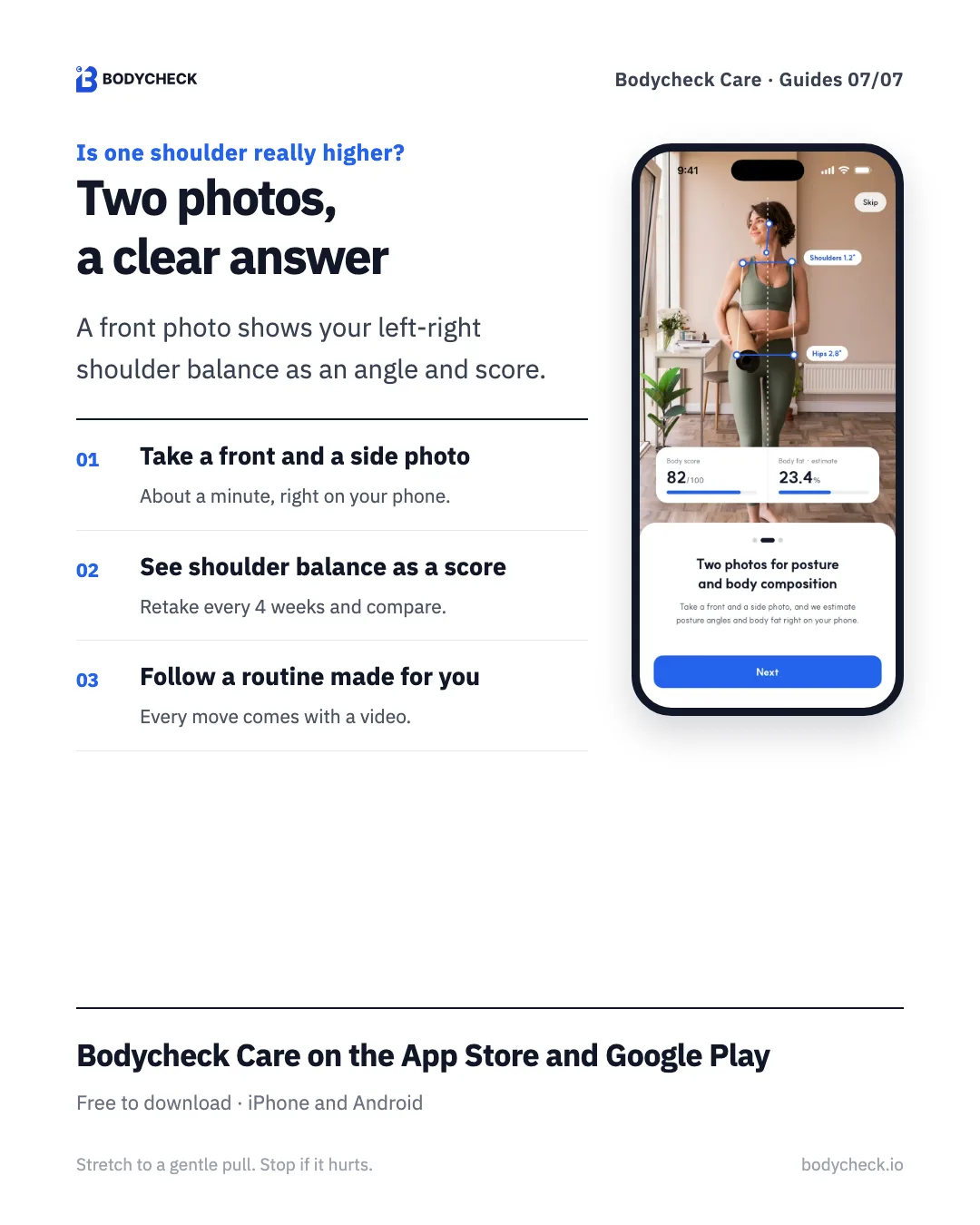
Mirror and photo checks shift a little each time with how you stand, the light and the camera angle. If you want the same yardstick every time, try Bodycheck Care. Take a front and a side full-body photo, and the app shows your shoulder balance from the front photo as an angle and a score. You also see head tilt, hip balance and knee balance, so you can tell whether it's just your shoulders or other areas tilt too.
- Get the app and take a front and a side full-body photo.
- See your shoulder balance as an angle and a score.
- Follow the moves picked for your result, each with a video.
- Retake the photos in the same spot after four weeks and compare.
The app is not a medical device. It's a way to record your posture with the same yardstick each time.
Bodycheck Care · Free
See whether one shoulder really sits higher, from two photos
Take a front and a side photo to see how far your head and shoulders sit forward as a score, then follow moves picked for your result, each with a video.
The 10-minute routine to work both shoulders evenly
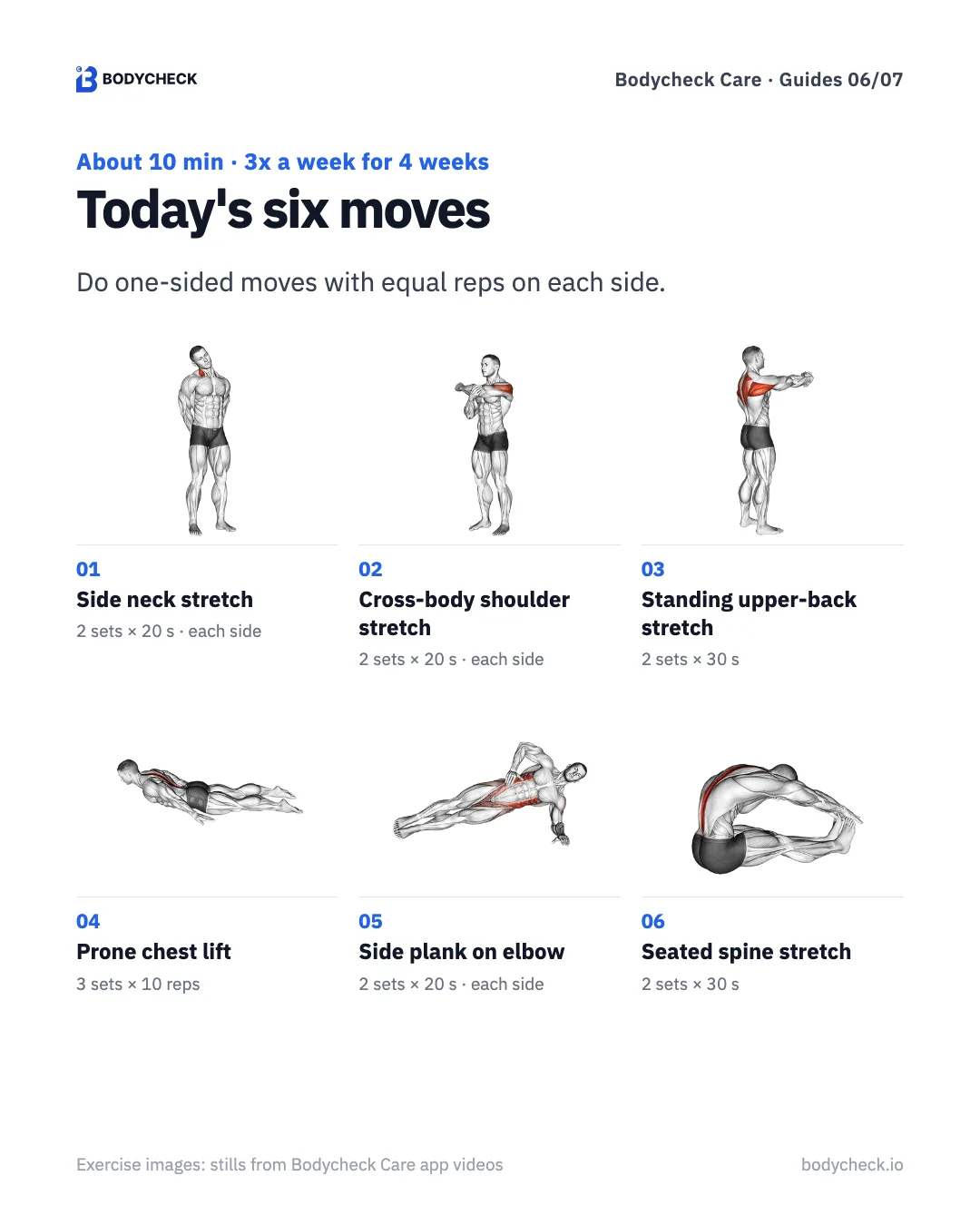
Loosen the side of your neck and the back of your shoulders, wake up your upper back and shoulder blades, hold a side plank, then finish by lengthening your spine. A mat is all you need. Do it three times a week on alternate days, for four weeks. For one-sided moves, always keep reps equal on both sides.
1. Side neck stretch · 2 sets × 20 s · each side
- Relax your shoulders and stand or sit up straight.
- Rest a hand lightly on the side of your head and tip your ear toward your shoulder.
- Press the other shoulder down so it doesn't rise with you.
- Hold 20 seconds, then switch sides. Notice which side pulls more.
2. Cross-body shoulder stretch · 2 sets × 20 s · each side
- Stand tall and reach one arm across your chest.
- Hold it just above the elbow with your other hand and draw it toward you.
- Hold 20 seconds where you feel the back of your shoulder stretch. Don't let that shoulder creep up toward your ear.
- Switch sides.
3. Standing upper-back stretch · 2 sets × 30 s
- Stand tall with feet shoulder-width apart.
- Lace your fingers and reach forward at shoulder height.
- Push your hands away and round your upper back so your shoulder blades spread apart.
- Breathe out slowly and hold 30 seconds.
4. Prone chest lift · 3 sets × 10 reps
- Lie face down with legs straight and hands by your head or at your sides.
- Squeeze your shoulder blades toward the middle of your back. Feel whether both sides move together.
- Lift your chest slightly off the floor and hold one second. Eyes on the floor, don't arch your lower back.
- Lower slowly and repeat 10 times.
5. Side plank on elbow · 2 sets × 20 s · each side
- Lie on your side with your elbow right under your shoulder.
- Stack your legs straight.
- Lift your hips so your body forms a straight line from head to feet.
- Hold 20 seconds, then switch sides. If it's too hard, bend your bottom knee and rest it on the floor.
6. Seated spine stretch · 2 sets × 30 s
- Sit with your legs straight out in front and reach your arms forward.
- Lengthen your back first.
- Breathe out and round forward one section at a time, starting from your head.
- Hold 30 seconds, then slowly roll back up.
At a glance
| # | Move | Sets |
|---|---|---|
| 1 | Side neck stretch | 2 × 20 s · each side |
| 2 | Cross-body shoulder stretch | 2 × 20 s · each side |
| 3 | Standing upper-back stretch | 2 × 30 s |
| 4 | Prone chest lift | 3 × 10 reps |
| 5 | Side plank on elbow | 2 × 20 s · each side |
| 6 | Seated spine stretch | 2 × 30 s |
Along with the routine, I've started switching my bag to the other shoulder every other day. The left side felt strange at first. In Bodycheck Care every move has a video, and the app counts the time and sets for you.
Frequently asked questions
One shoulder looks a little higher in the mirror. Is something wrong? Not necessarily. Bodies are never perfectly symmetrical, and how you stand or which leg takes your weight changes what you see. But if the difference is large, appeared suddenly, or comes with pain, see a doctor before you exercise. A doctor can also check your spine.
Does carrying a bag on one shoulder make my shoulders uneven? You can't say that for sure. But you may get used to hiking that shoulder up so the strap won't slip, so switching sides is an easy thing to try.
Should I work the higher side more? In this routine, keep reps equal on both sides. Notice which side feels stiffer or harder, and write it down.
How should I take the back photo? Wear fitted clothes, stand the way you normally do, and ask someone to take one photo from behind at chest height. Use the same spot and distance each time so you can compare later.
Can I see my shoulder height difference as a number? Bodycheck Care takes a front and a side full-body photo and shows your left-right shoulder balance from the front photo as an angle and a score. You also see head tilt, hip balance and knee balance, and you can retake the photos every four weeks to compare. It is free on iPhone and Android.
Before you start
- Mirror and photo checks give you a rough picture. Don't judge your body from any single result.
- Stretch to a gentle pull. Stop right away if anything hurts or tingles.
- Don't hold your breath. Breathe out as you push.
- This is exercise guidance. If the difference between your shoulders is clearly large or appeared suddenly, or you have pain in your shoulder, back or neck or numbness in your arm, see a doctor before you exercise.
How about putting a fingertip on each shoulder in the mirror tonight? Get one photo from behind too, then take another in the same spot four weeks from now and compare.
Bodycheck Care · Free
Take two photos and get moves picked for you
Take a front and a side photo to see how far your head and shoulders sit forward as a score, then follow moves picked for your result, each with a video.
References
- Photos: Pexels (free license). Exercise images and app screens: Bodycheck Care app.