Bow Legs in Adults: How to Check Your Leg Line at Home, Plus a 12-Minute Routine
See whether there's a gap between your knees when you stand with your feet together, learn how bone shape differs from standing habits, what exercise can and can't do, and follow a 12-minute routine for the back of your legs.
Short answer: Bow legs means a gap between your knees when you stand with your ankles together. Check in a mirror and a front photo, then stand again with soft knees and toes forward to see how much of it is habit. Exercise won't change bone shape, but it can help how you stand and move. If there's pain, a sudden change, only one leg bows, or it's a child's legs, see a doctor first.
Hi, I'm an editor on the Bodycheck Care team. A while ago I was in a group photo at a friend's wedding. When the photos came back, I could see the flowers behind me through the gap between my knees, even with my feet together. After that I paid attention to how I stood at the bus stop. Knees locked back. Toes pointed out.
One photo isn't enough to say your legs are bowed. So today we'll cover how to check your standing leg line yourself, how to separate bone shape from standing habits, an honest look at what exercise can and can't do, and a 12-minute routine for the back of your legs.
Is there a gap between your knees with your feet together?
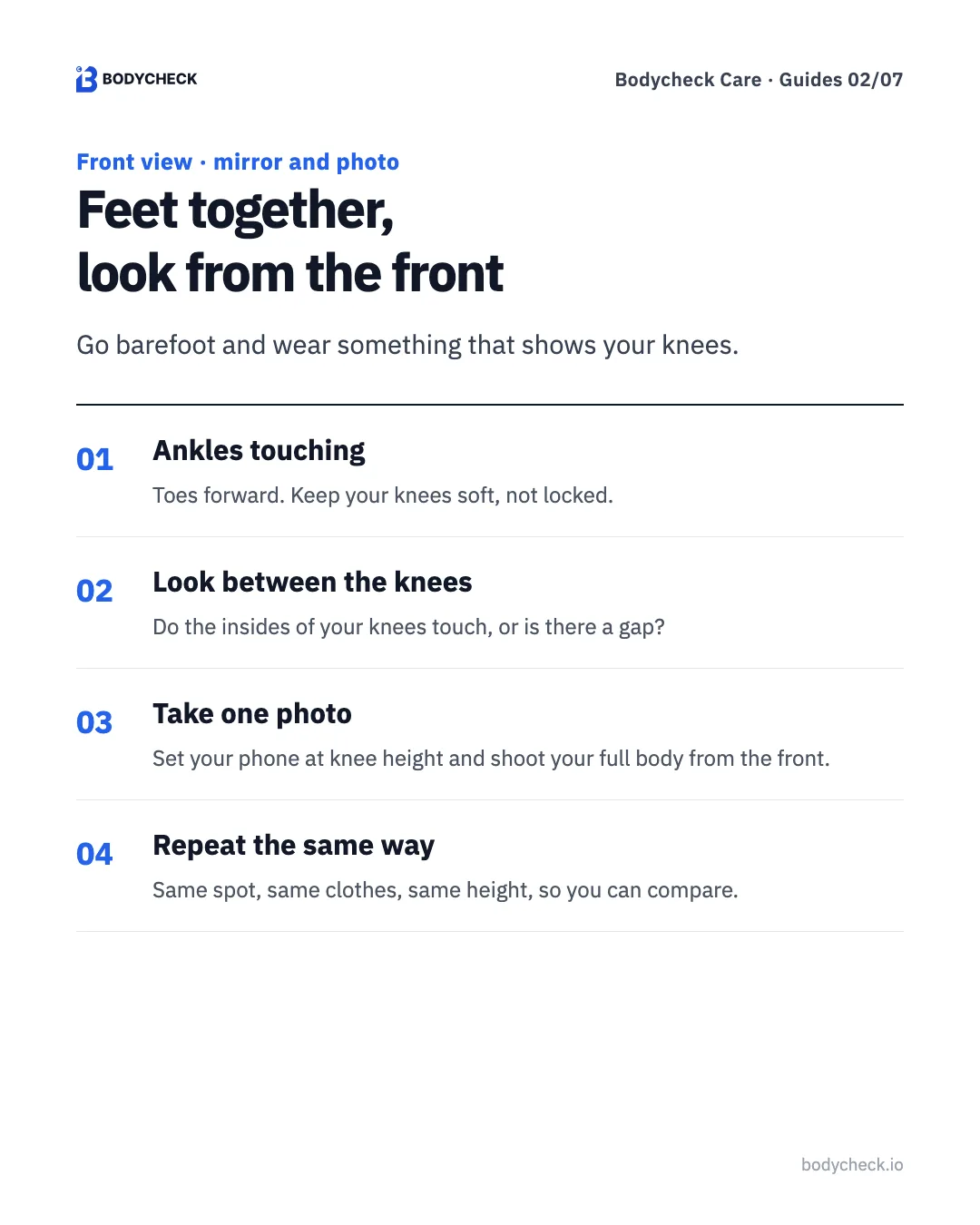
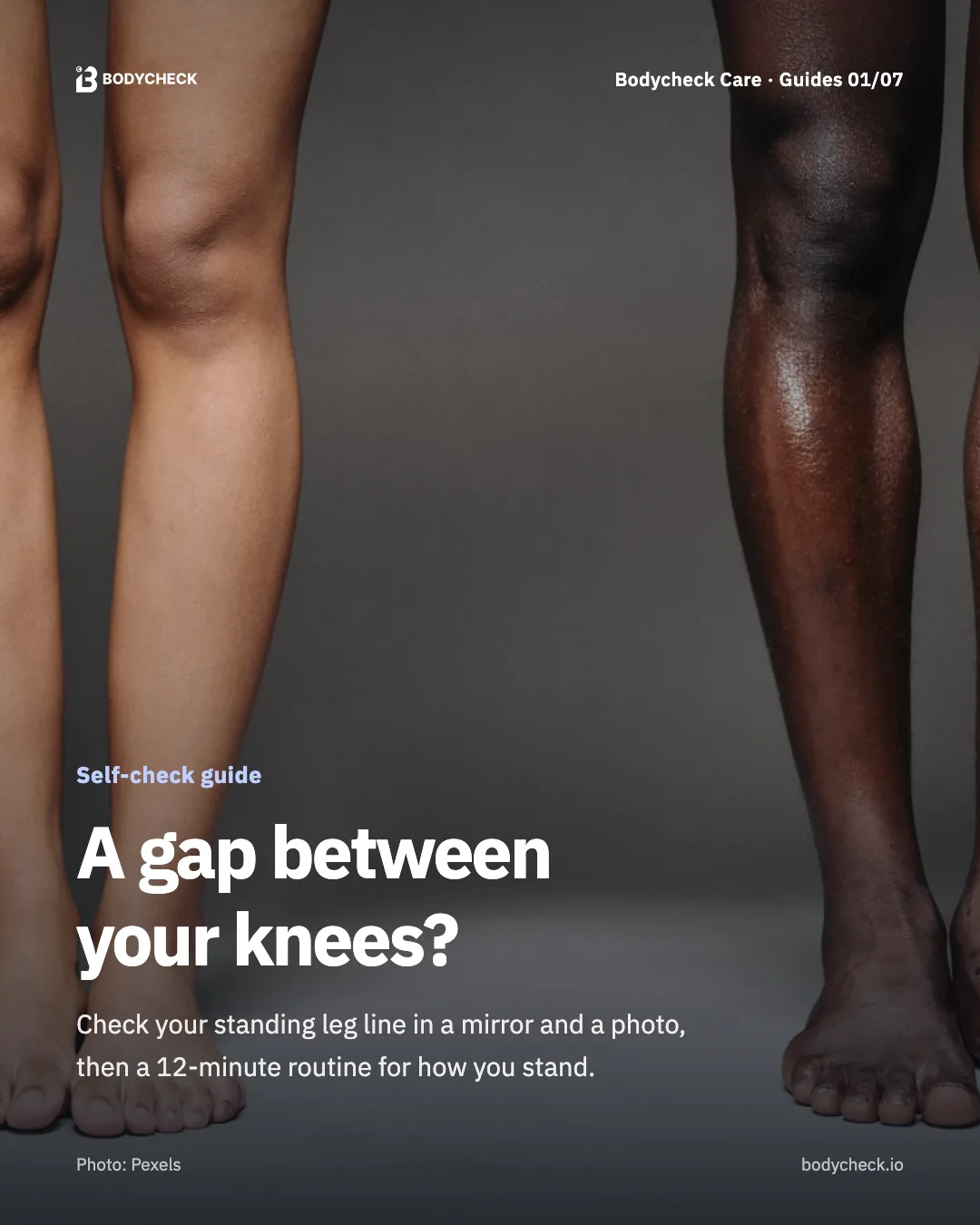
Bow legs usually means that when your inner ankles touch, your knees don't, so your legs curve outward. Go barefoot, wear shorts or leggings that show your knees, and try this.
- Ankles touching. Toes forward. Keep your knees relaxed, not locked.
- Look between your knees. Do they touch? If not, note roughly how many fingers fit in the gap.
- Take one photo. Mirrors flip left and right and make you look down, so prop your phone at knee height and shoot your full body from the front.
- Repeat the same way. Same spot, same clothes, same height, so you can compare later.
Is it bone shape or how you stand?
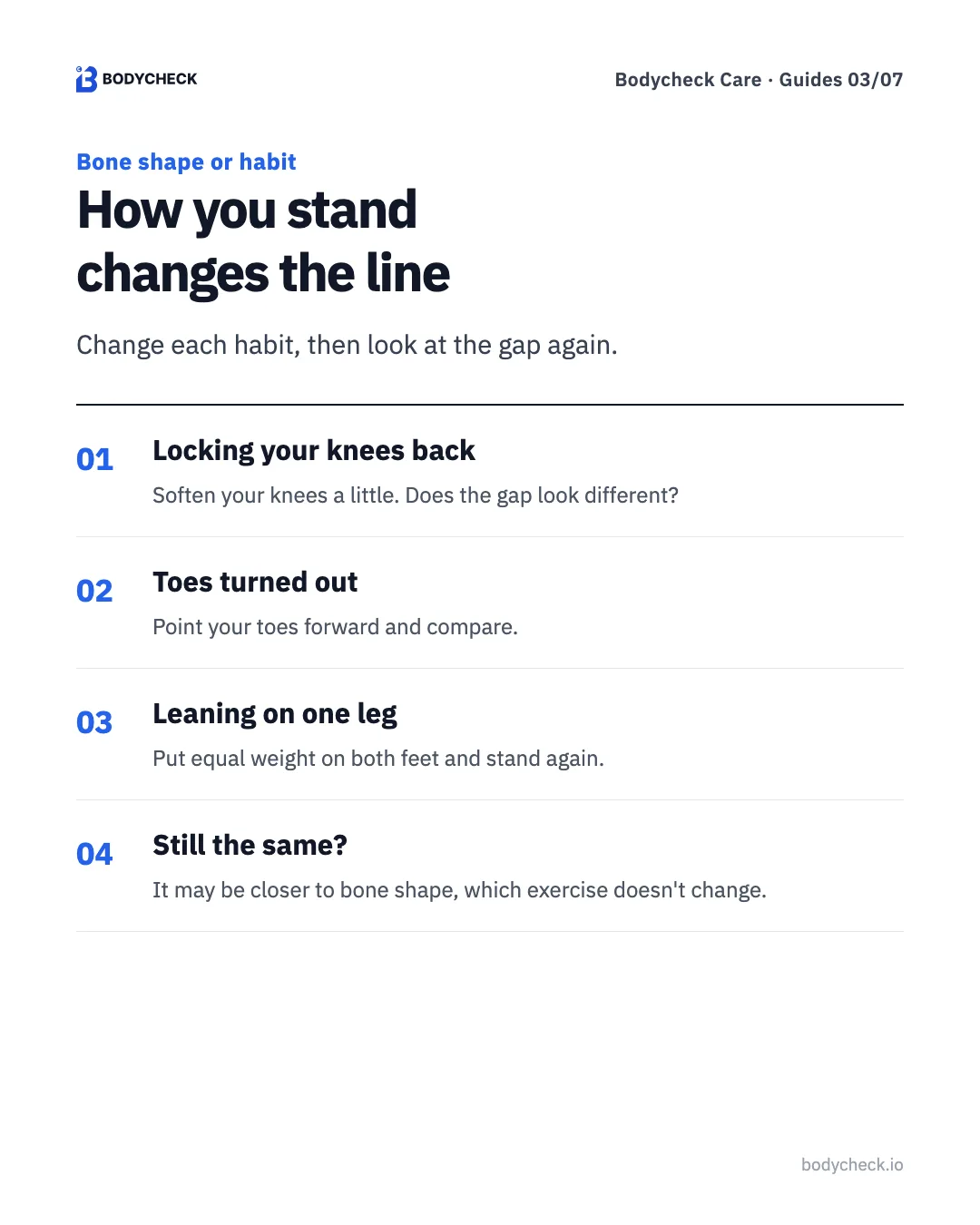
Your standing leg line comes from the shape of your leg bones and how you stand. Bone shape is largely something you're born with. Standing habits sit on top of it and can make your legs look more bowed.
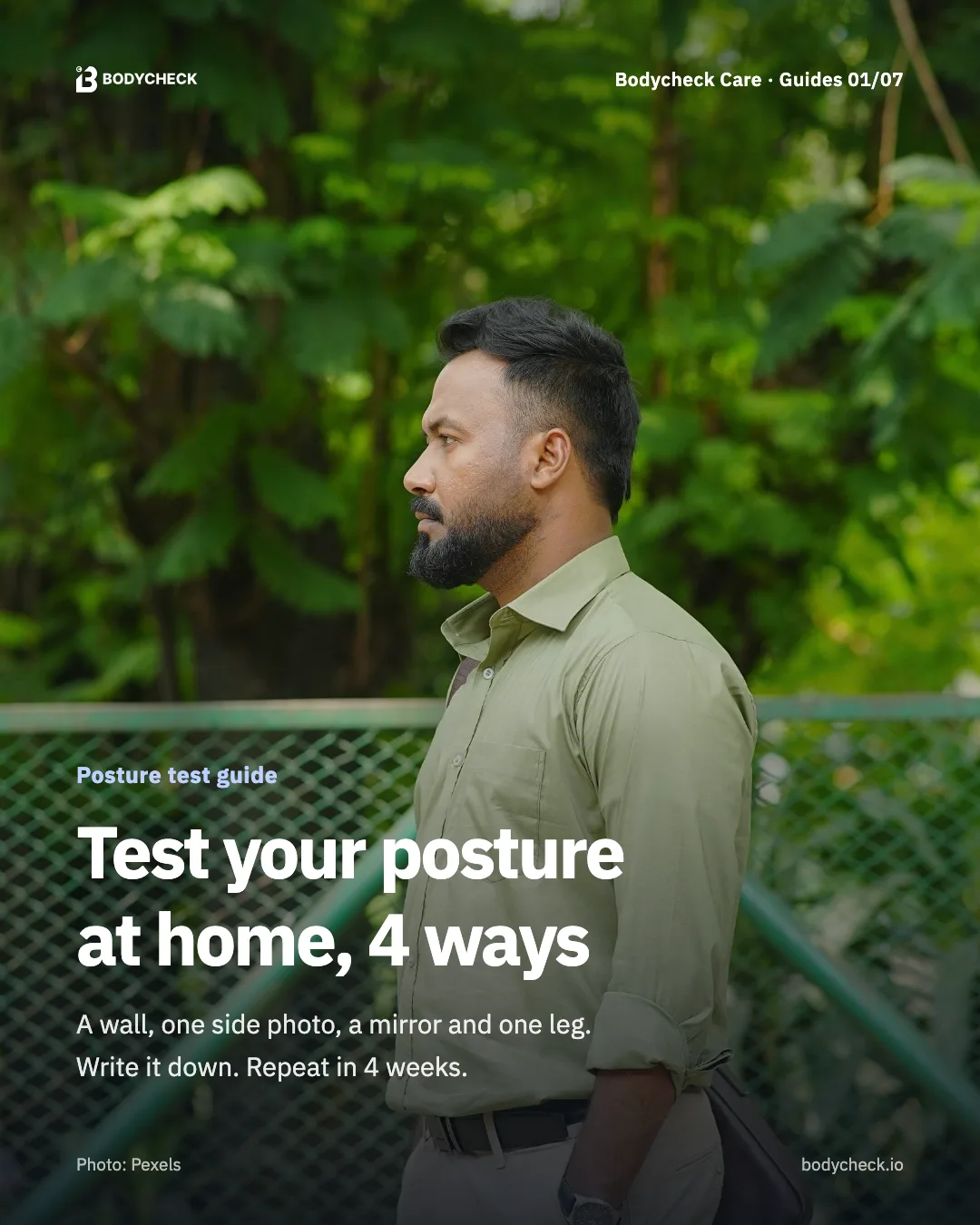
Three habits come up a lot: locking your knees back, turning your toes out, and leaning on one leg. Change them one at a time. Soften your knees, point your toes forward, put equal weight on both feet. Then take another photo under the same conditions and put the two side by side.
If they look very different, habit may be part of the picture. If they look about the same, it may be closer to bone shape. Telling which is which for sure is a job for a doctor. In these cases, see one before you exercise:
- Your knees or legs hurt
- Your leg shape has changed suddenly
- Only one leg bows
- You're worried about a child's legs (children's legs often change shape as they grow, so a pediatrician or orthopedic doctor should take a look)
Can exercise change the shape of your legs?
To be honest: exercise won't reshape your leg bones. Be wary of anything that promises straight legs in a few weeks.
What exercise can do is different. It can build the strength to stand comfortably without locking your knees, help you feel your weight spread over both feet, and help you use both legs evenly when you walk or climb stairs. If a standing habit was making the gap look wider, changing that habit can make your legs look different.
So which muscles should you work?
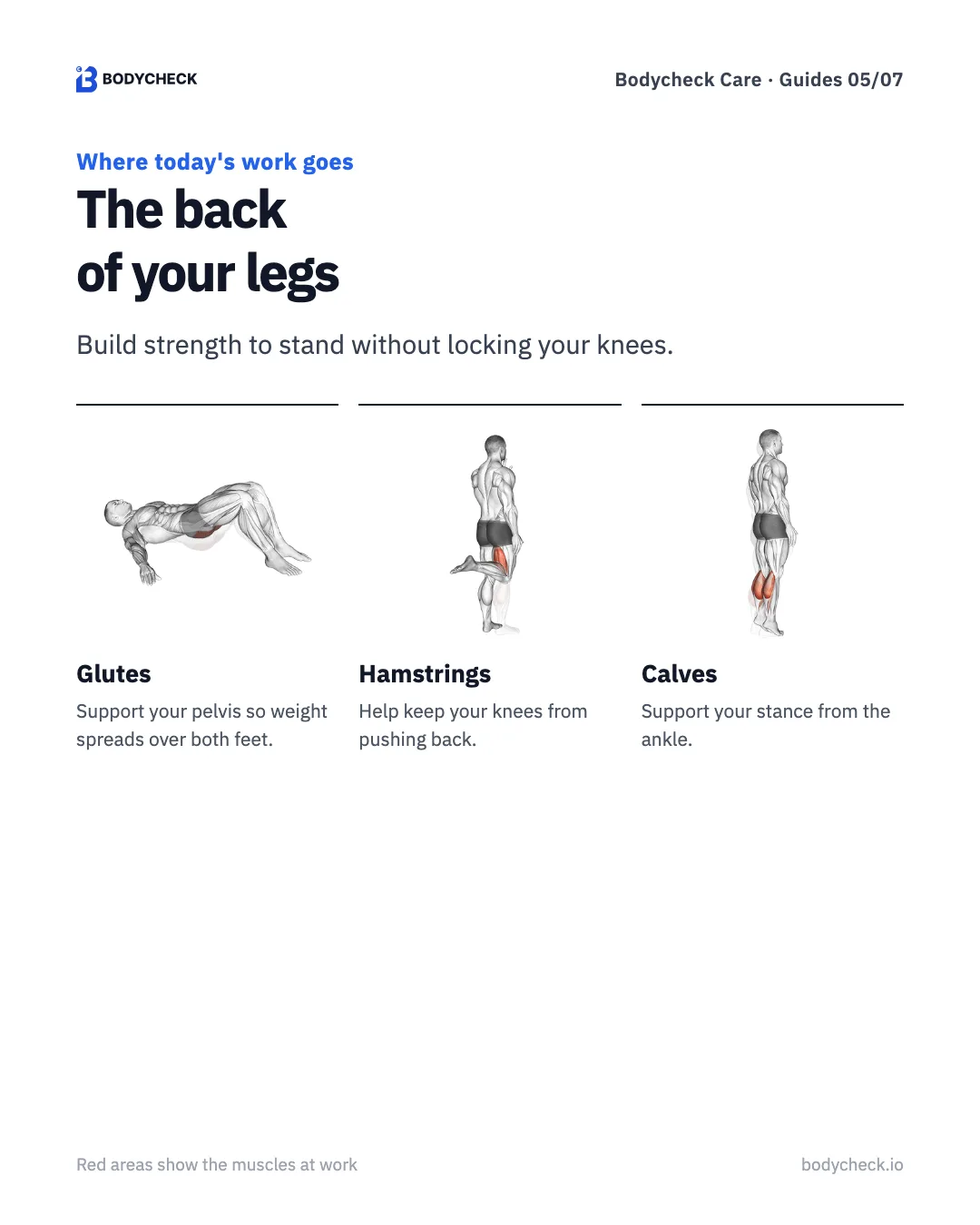
If you tend to lock your knees back, practicing standing with the muscles at the back of your legs helps. So today's routine works the glutes (bridge march), hamstrings (leg curl) and the whole thigh in a hold (wall sit march), then stretches your calves, deep hip muscles and inner thighs.
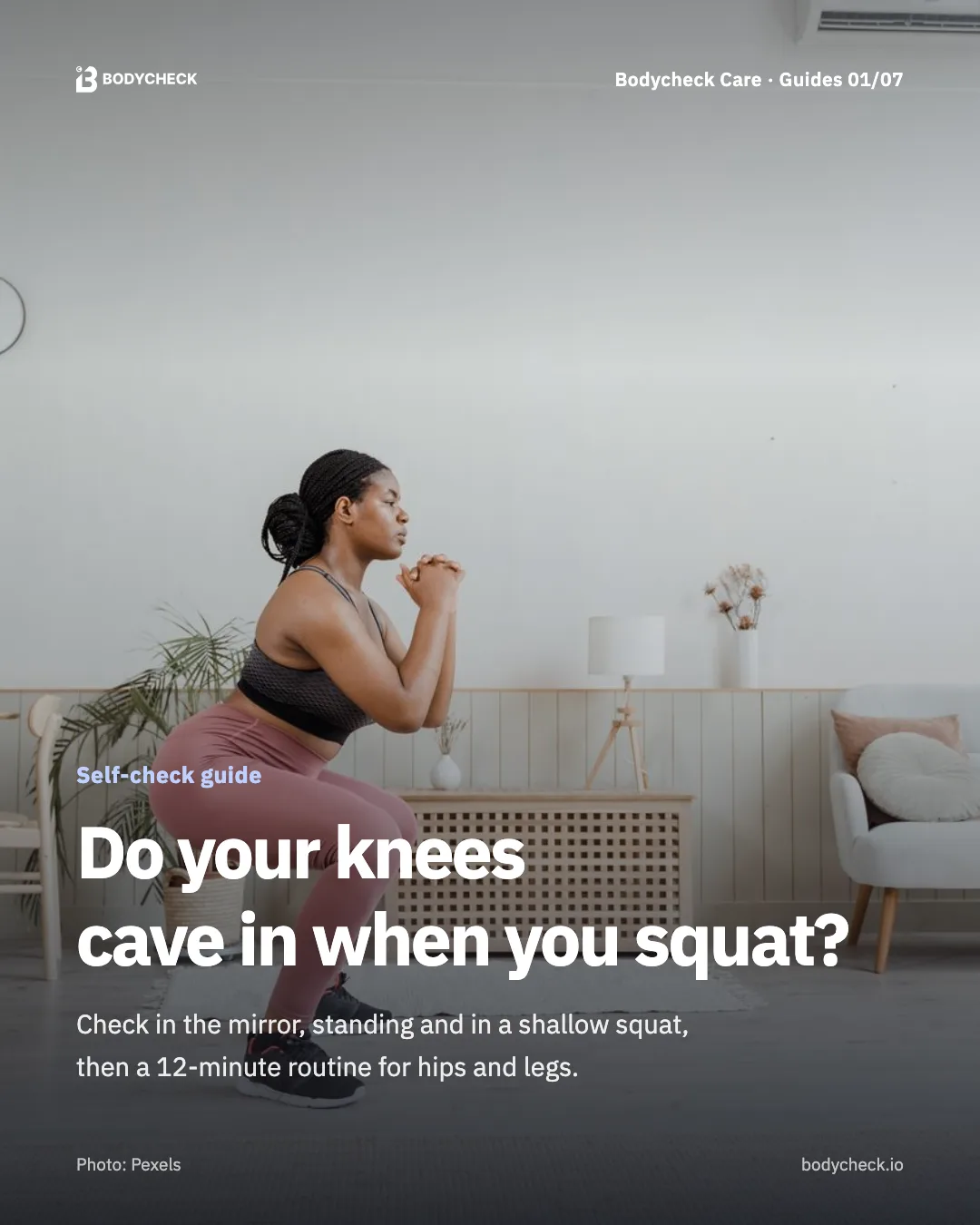
Knees caving inward during squats or on stairs is a different question from your standing leg line. I covered it in Knee alignment self-check. That routine focused on the outer hip. This one is about the back of your legs.
How can you see your knee balance as a number?
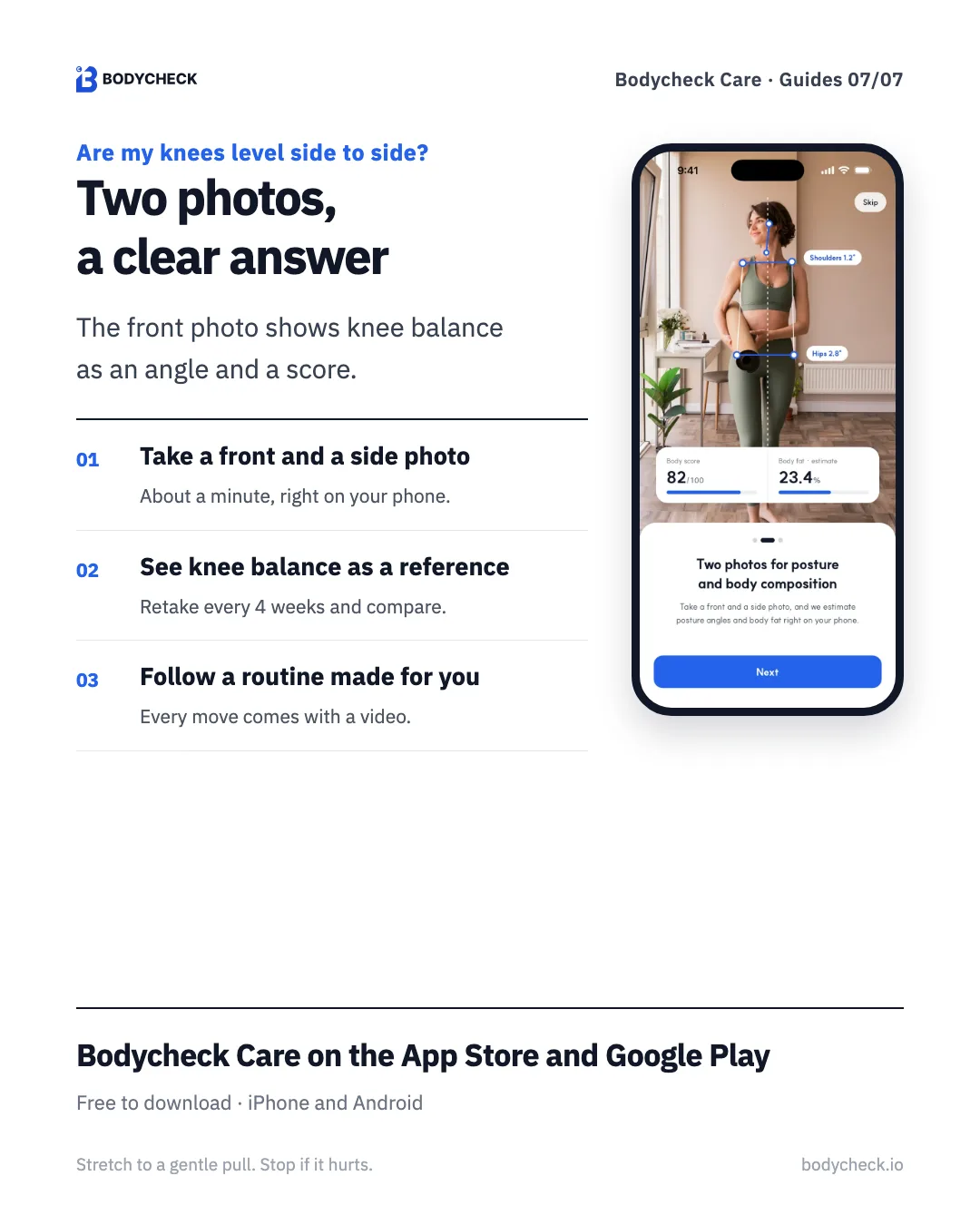
Even side by side, photos can be hard to read. In Bodycheck Care you take a front and a side full-body photo, and the app shows knee balance from the front, along with head tilt, shoulder balance and hip balance, as angles and a score.
The app doesn't measure the gap between your knees or tell you whether you have bow legs. Use knee balance as a reference number for whether your knees look even side to side, and compare it when you measure again under the same conditions. The app is not a medical device.
- Get the app and take a front and a side full-body photo.
- See your knee balance from the front as an angle and a score.
- Follow the moves picked for your result, each with a video.
- Retake the photos under the same conditions after four weeks and compare.
Bodycheck Care · Free
See your knee balance from two photos
Take a front and a side photo to see how far your head and shoulders sit forward as a score, then follow moves picked for your result, each with a video.
The 12-minute routine for how you stand
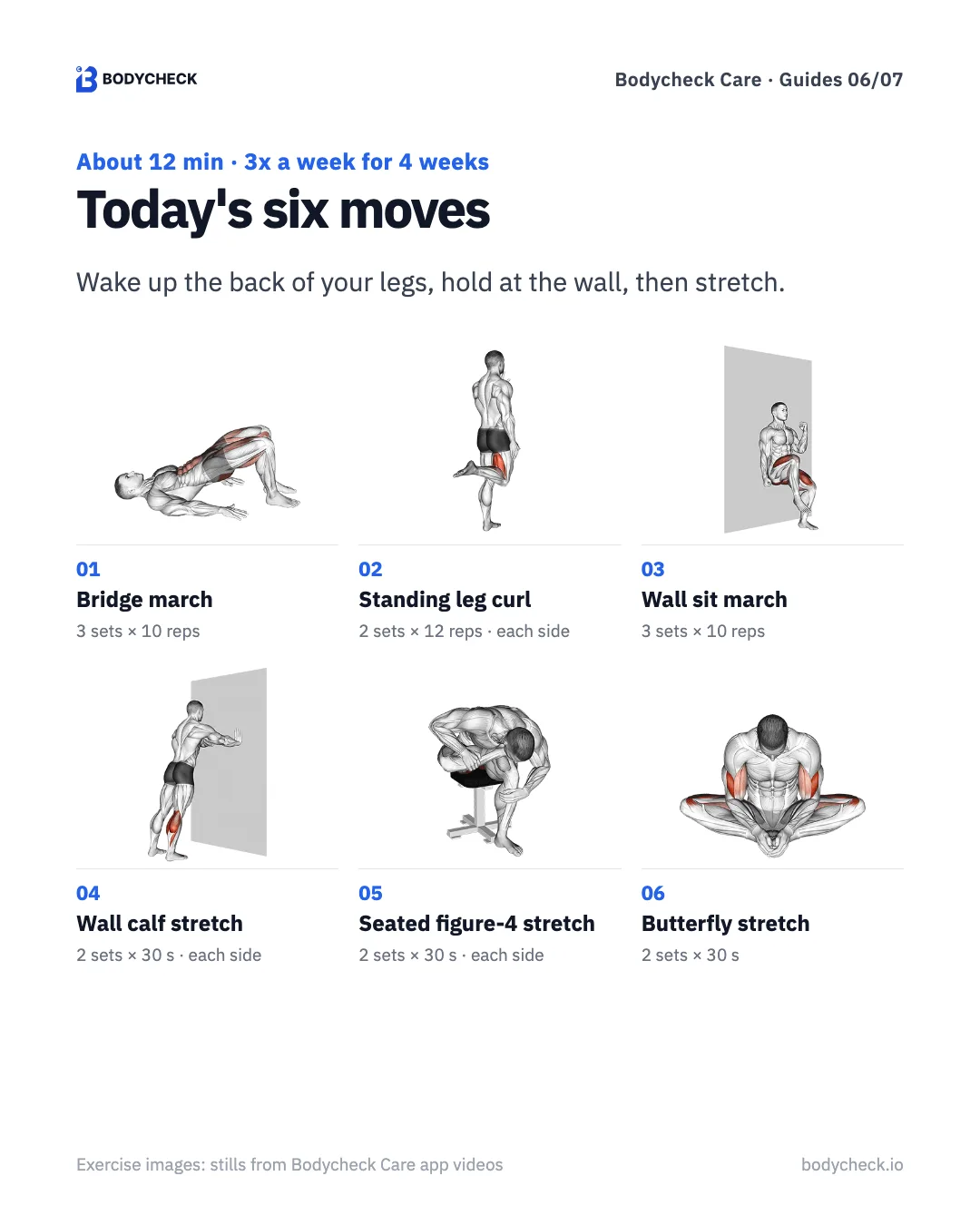
Wake up the back of your legs, hold at the wall using both legs evenly, then stretch. A mat, a chair and a clear wall are enough. Do it three times a week on alternate days, for four weeks. In the standing moves, keep the knee of your standing leg soft instead of locked.
1. Bridge march · 3 sets × 10 reps
- Lie with knees bent and lift your hips into a bridge.
- Keep your hips at the same height and lift one knee toward your chest.
- Lower that foot and lift the other one.
- Alternate for 10 reps without letting your pelvis tip.
2. Standing leg curl · 2 sets × 12 reps · each side
- Hold a chair and stand tall.
- Bend one knee and bring your heel toward your glutes.
- Keep your thigh still and move only your lower leg.
- Lower slowly. After 12 reps, switch sides.
3. Wall sit march · 3 sets × 10 reps
- Stand with your back against a wall, feet hip-width apart.
- Slide down the wall to a comfortable depth. Deeper is harder.
- Hold there and lift one foot slightly, then lower it.
- Alternate for 10 reps.
4. Wall calf stretch · 2 sets × 30 s · each side
- Face a wall and place both hands on it.
- Step one foot back and keep that heel on the floor.
- Bend your front knee and lean toward the wall to stretch your calf.
- Hold 30 seconds, then switch legs.
5. Seated figure-4 stretch · 2 sets × 30 s · each side
- Sit on a chair and rest one ankle on the opposite knee.
- Keep your back straight and lean your chest forward.
- Turn your upper body slightly toward the raised leg to stretch deep in your hip.
- Hold 30 seconds, then switch sides.
6. Butterfly stretch · 2 sets × 30 s
- Sit on the floor with the soles of your feet together.
- Hold your feet and sit tall.
- Slowly lower your knees toward the floor to stretch your inner thighs. No bouncing.
- Breathe and hold for 30 seconds.
At a glance
| # | Move | Sets |
|---|---|---|
| 1 | Bridge march | 3 × 10 reps |
| 2 | Standing leg curl | 2 × 12 reps · each side |
| 3 | Wall sit march | 3 × 10 reps |
| 4 | Wall calf stretch | 2 × 30 s · each side |
| 5 | Seated figure-4 stretch | 2 × 30 s · each side |
| 6 | Butterfly stretch | 2 × 30 s |
With the bridge march, it's hard to tell from text whether your pelvis is tipping. In Bodycheck Care every move has a video, and the app counts the time and sets for you.
Frequently asked questions
Can exercise straighten bow legs? Exercise doesn't change the shape of your leg bones. But if locking your knees or turning your toes out makes the gap look wider, changing how you stand can make your legs look different.
How can I tell bone shape from a standing habit? Soften your knees, point your toes forward, stand again and take a photo under the same conditions. If it looks very different, habit may be part of it. If it looks the same, it may be closer to bone shape. Only a doctor can tell you for sure.
When should I see a doctor first? If your knees or legs hurt, if your leg shape has changed suddenly, if only one leg bows, or if you're worried about a child's legs, see a doctor before you start exercising.
Is it bad to stand with my knees locked? Locking your knees all the way means you lean on your joints more than your muscles, and from the front your legs can look more bowed. Practice standing with soft knees and your weight spread over both feet.
Can an app measure bow legs? Bodycheck Care doesn't measure the gap between your knees. From a front and a side full-body photo, it shows knee balance from the front, along with head, shoulder and hip balance, as angles and a score. Treat it as a reference. The app is free.
Before you start
- Stretch to a gentle pull. Stop right away if anything hurts or tingles.
- Start the wall sit march shallow, at a depth your knees are comfortable with.
- Don't hold your breath. Breathe out as you push.
- Don't use this routine to assess a child's legs. Have a pediatrician or orthopedic doctor take a look.
- This is exercise guidance. If you have knee or leg pain, a sudden change in leg shape, or only one leg bows, see a doctor before you exercise.
How about starting with one thing today: stand in front of a mirror with soft knees and toes pointing forward. Just putting two photos side by side can show you a lot about how you stand.
Bodycheck Care · Free
Take two photos and get moves picked for you
Take a front and a side photo to see how far your head and shoulders sit forward as a score, then follow moves picked for your result, each with a video.
References
- Photos: Pexels (free license). Exercise images and app screens: Bodycheck Care app.